
How Long Should Aquarium Lights Stay On Daily

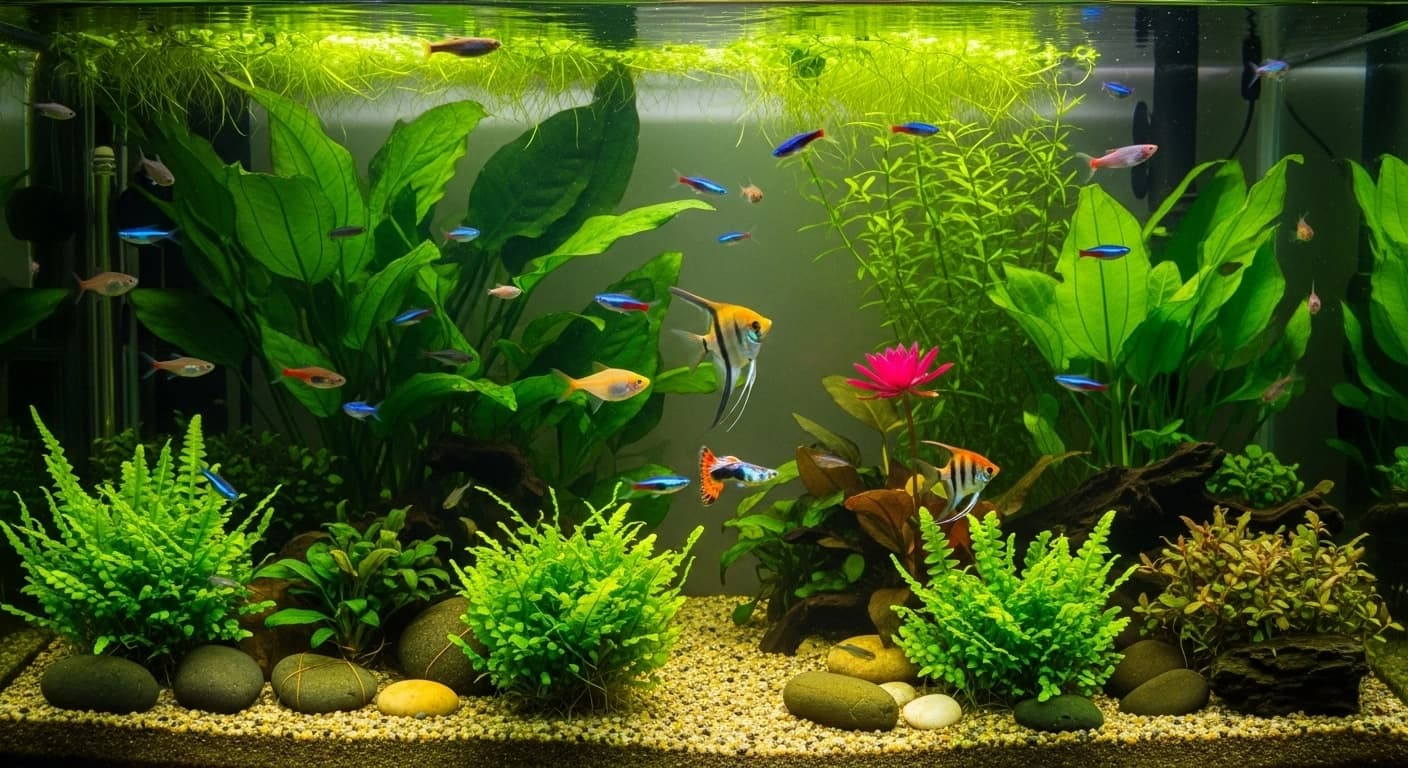
How long should aquarium lights stay on daily? Aquarium lights should stay on for 8 to 10 hours per day for most freshwater community tanks, while planted aquariums may require 10 to 12 hours and reef tanks typically need 8 to 10 hours.
This duration mimics natural day and night cycles that aquatic life depends on for their health and well-being. Maintaining a consistent lighting schedule helps prevent algae overgrowth, supports plant photosynthesis, and keeps your fish behaving naturally.
Getting your aquarium lighting duration right is one of the most important aspects of fishkeeping that beginners often overlook.
Too much light leads to excessive algae growth and stressed fish, while too little light can stunt plant growth and disrupt your aquarium's biological balance. The key is finding the sweet spot that works for your specific tank setup.
This comprehensive guide will walk you through everything you need to know about aquarium light duration. You'll learn the science behind lighting cycles, recommended durations for different tank types, warning signs that your schedule needs adjustment, and practical tips for maintaining consistency throughout the year.
Understanding Aquarium Light Duration and Its Importance
The amount of time your aquarium lights stay on each day directly affects every living organism in your tank. Light duration influences fish behavior, plant health, algae growth, and the overall stability of your aquatic ecosystem.
When you provide the right amount of light at the right times, you create an environment where fish feel secure and plants can thrive without algae taking over.
Many aquarium hobbyists make the mistake of leaving their lights on too long, thinking more light equals healthier plants and happier fish.
However, this approach often backfires by triggering explosive algae blooms that turn your pristine aquarium into a green mess. Excessive lighting also stresses fish by preventing them from experiencing the darkness they need for rest and recovery.
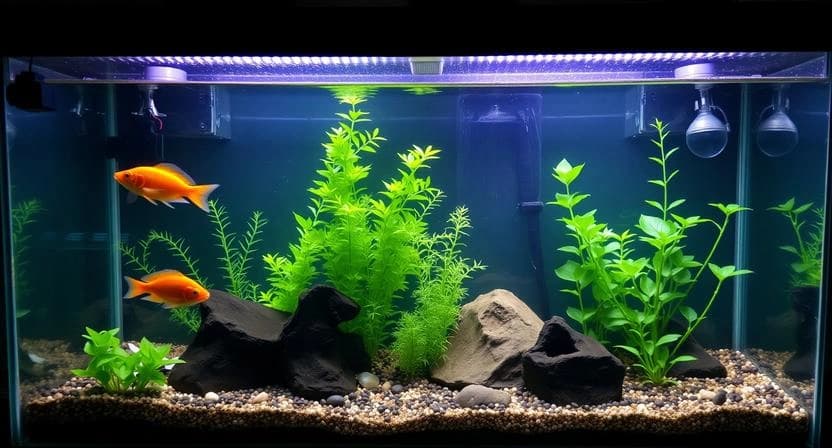
On the flip side, insufficient lighting creates its own set of problems. Plants in your aquarium need adequate light to photosynthesize and produce oxygen for your fish.
When light duration is too short, plants become weak, pale, and eventually die off. This plant decline disrupts the nitrogen cycle and can lead to poor water quality.
The importance of proper light duration extends beyond just plants and algae. Your fish have evolved over millions of years to expect predictable day and night patterns.
Disrupting these patterns with irregular or excessive lighting can suppress their immune systems, reduce their appetite, and even affect their coloration. Establishing the correct light duration is essential for maintaining a balanced, healthy aquarium environment.
The Science Behind Aquarium Lighting Cycles
Understanding the biological processes affected by light helps you make informed decisions about your aquarium lighting schedule. Light doesn't just illuminate your tank for viewing pleasure. It serves as the primary environmental cue that regulates countless physiological processes in both fish and plants.
How Fish Perceive Day and Night Cycles
Fish have sophisticated visual systems that detect changes in light intensity and duration throughout the day. Most fish species possess specialized photoreceptor cells in their eyes and pineal gland that respond to light levels in their environment.
These photoreceptors send signals to the brain that trigger various behavioral and physiological responses based on whether it's day or night.
During daylight hours, your fish are generally more active, feeding, exploring, and interacting with tank mates. As light levels decrease, most species begin to settle into resting spots where they'll spend the night in a state of reduced activity. Some fish even change color slightly between day and night, becoming paler or darker depending on their species and the lighting conditions.
The transition periods between light and dark are particularly important for fish. Sudden changes from bright light to complete darkness can stress fish and cause them to bump into decorations or injure themselves. This is why many experienced aquarists use gradual lighting transitions or dim room lights before turning off aquarium lights completely.
The Role of Light in Plant Photosynthesis
Aquatic plants rely on light as their primary energy source through the process of photosynthesis. During photosynthesis, plants absorb light energy and use it to convert carbon dioxide and water into glucose and oxygen. The oxygen released benefits your fish, while the glucose provides energy for plant growth and maintenance.
The relationship between light duration and photosynthesis isn't simply linear where more light always equals more growth. Plants also need periods of darkness to complete certain metabolic processes.
During dark periods, plants engage in respiration, breaking down stored glucose to fuel cellular activities and growth. Without adequate dark periods, plants can become stressed and may actually grow more slowly despite receiving plenty of light.
Different aquatic plant species have evolved in different natural habitats with varying light conditions. Some plants thrive with lower light levels and shorter durations, while others demand intense lighting for extended periods.
Understanding your specific plants' requirements helps you set an appropriate light duration that promotes healthy growth without encouraging algae.
Circadian Rhythms in Aquatic Environments
Both fish and plants possess internal biological clocks called circadian rhythms that regulate their daily cycles of activity and rest.
These rhythms are synchronized by environmental light cues and continue to function even in constant conditions. Your aquarium lighting schedule serves as the primary zeitgeber, or time cue, that keeps these internal clocks properly set.
When you maintain a consistent lighting schedule, your fish and plants can anticipate daily events like feeding time and activity periods. This predictability reduces stress and allows organisms to optimize their energy use throughout the day. Fish that know when lights will turn on and off can plan their feeding and resting behaviors accordingly.
Disrupting circadian rhythms with irregular lighting patterns can have serious consequences for aquarium inhabitants. Studies have shown that inconsistent light schedules can suppress immune function in fish, making them more susceptible to diseases.
Plants with disrupted circadian rhythms may have difficulty coordinating photosynthesis and respiration, leading to reduced growth rates and poor health.
Recommended Aquarium Light Duration for Different Tank Types
Not all aquariums have the same lighting needs. The ideal duration for your lights depends on what type of tank you're running and what organisms you're keeping. Here are the general guidelines for the most common aquarium setups.
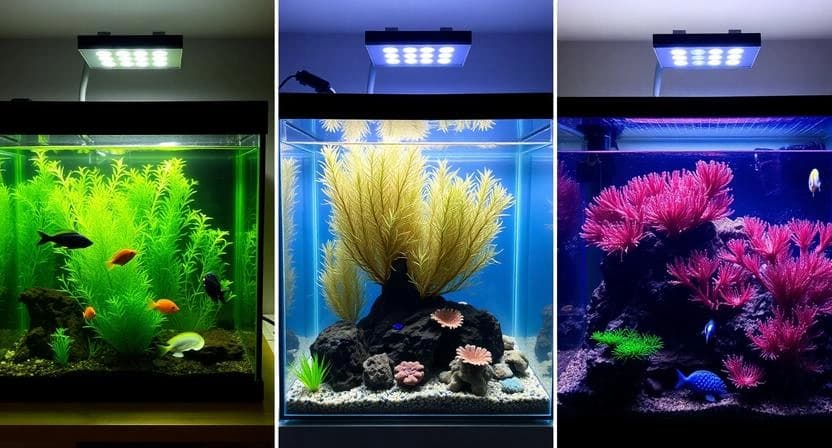
Freshwater Community Tanks
Standard freshwater community tanks without live plants should have their lights on for 8 to 10 hours daily. This duration provides enough illumination for you to enjoy watching your fish while preventing excessive algae growth.
Most tropical fish species come from environments where they experience roughly 12 hours of daylight, but aquariums typically need less light than nature provides because they lack the natural algae-controlling mechanisms found in rivers and lakes.
If your community tank contains only artificial plants and decorations, you have more flexibility with lighting duration since you're not supporting photosynthesis. However, maintaining consistency remains important for your fish's circadian rhythms.
Setting your lights to turn on around the same time each morning and off each evening helps establish a predictable environment.
Many aquarists with community tanks find that 8 hours works perfectly when combined with proper feeding habits and regular water changes. If you notice algae starting to accumulate on glass or decorations, try reducing the duration to 7 hours before trying other interventions. The goal is finding the minimum duration that keeps your fish healthy while keeping algae under control.
Planted Aquariums
Planted aquariums typically require 10 to 12 hours of light daily to support robust plant growth and maintain a healthy balance. Plants need sufficient time to photosynthesize and produce the energy required for growth, but extending beyond 12 hours rarely provides additional benefits and usually just encourages algae instead.
The specific duration within this range depends on your light intensity and plant species. High-intensity LED lighting may allow you to use the lower end of the range while still supporting demanding plants. Lower-intensity lighting may require the full 12 hours to provide adequate energy for plant photosynthesis.
Some advanced planted tank hobbyists use a technique called the siesta or split photoperiod method. This involves running lights for a few hours in the morning, turning them off for a midday break of 2 to 3 hours, then running them again in the evening.
This approach can help control algae while still providing sufficient total light hours for plants. However, beginners should master consistent single-period lighting before experimenting with split schedules.
Saltwater and Reef Tanks
Saltwater fish-only tanks generally do well with 8 to 10 hours of lighting per day, similar to freshwater community tanks. Marine fish benefit from consistent day and night cycles just like their freshwater counterparts. The main difference is that saltwater aquariums often use more intense lighting to showcase the vibrant colors of marine fish.
Reef tanks with corals have more complex lighting requirements. Most reef aquariums run lights for 8 to 10 hours daily, though the specific duration and intensity should match the types of corals you're keeping.
SPS corals from shallow reef environments typically need more intense lighting, while soft corals and LPS varieties from deeper waters thrive with moderate intensity and duration.
Many reef aquarium LED systems allow you to program gradual intensity ramps that simulate dawn and dusk transitions. These systems might run for 10 to 12 hours total, but the peak intensity period may only last 6 to 8 hours.
The gradual transitions reduce stress on corals and fish while creating stunning visual effects. Always research the specific lighting requirements of your coral species before finalizing your schedule.
Factors That Influence How Long Your Aquarium Lights Should Stay On
While general guidelines provide a starting point, several factors specific to your aquarium may require you to adjust the recommended light duration. Your tank's unique characteristics and challenges should inform your final lighting schedule.
The intensity of your aquarium lights plays a major role in determining optimal duration. High-output LED systems or fixtures positioned very close to the water surface deliver more light energy per hour than older fluorescent tubes or dimmer LEDs.
If you have particularly intense lighting, you may need to reduce the duration to 6 to 8 hours to prevent algae problems. Conversely, lower-intensity lighting might require extending the photoperiod to 10 to 12 hours for adequate plant growth.
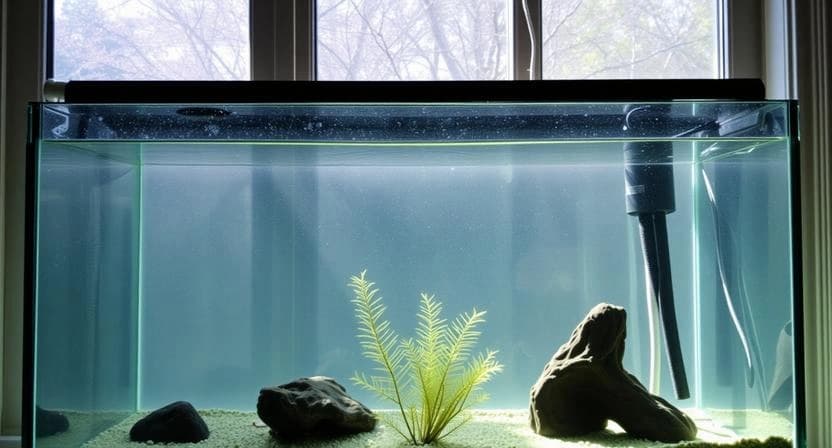
The amount of natural sunlight your aquarium receives affects how long you need to run artificial lights. Tanks positioned near windows receive supplemental natural light that contributes to the total daily light exposure.
If your aquarium sits in a bright room or receives direct sunlight for several hours daily, you should reduce your artificial lighting duration accordingly. Too much combined light will inevitably lead to algae blooms.
Your tank's nutrient levels also influence the ideal light duration. Aquariums with high nutrient loads from overfeeding or infrequent water changes will grow algae more readily at any light duration.
If you're battling persistent algae despite reasonable lighting schedules, the problem may stem from excess nutrients rather than light duration. Address water quality issues before making dramatic changes to your lighting schedule.
The density and species of plants in your aquarium determine how much light gets absorbed versus how much is available to fuel algae growth.
Heavily planted tanks with fast-growing species can handle longer light durations because plants outcompete algae for nutrients. Sparsely planted tanks or those with slow-growing species may need shorter durations since unused light energy goes toward algae instead of plant growth.
Signs Your Aquarium Light Duration Needs Adjustment
Knowing when to modify your lighting schedule requires observing your aquarium carefully and recognizing the warning signs that indicate problems. Your tank will communicate whether the current light duration is appropriate through several visible indicators.
Excessive Algae Growth Indicators
The most obvious sign that your lights are on too long is rapid algae growth that outpaces your ability to control it through normal maintenance. Green spot algae appearing on glass and decorations, brown diatom films covering surfaces, or green water that clouds your entire tank all indicate excessive light duration or intensity.
While some algae is normal and even beneficial in established aquariums, explosive growth suggests an imbalance.
Different types of algae can point to specific lighting issues. Green dust algae that forms a powdery coating on glass typically indicates lights that are on too long or too intense.
Blue-green cyanobacteria, which forms slimy sheets over substrate and decorations, often appears when light duration combines with poor water circulation and high nutrient levels. Black beard algae, though influenced by multiple factors, tends to worsen with extended light periods.
If you're experiencing algae problems, try reducing your light duration by one hour increments every few days until growth slows. Most algae issues resolve when you find the sweet spot between enough light for plants and too much light for algae. Keep in mind that algae problems take time to improve, so give each adjustment at least a week before making further changes.
Plant Health Warning Signs
Plants that aren't receiving adequate light duration will show specific symptoms that differ from other common plant problems. Pale or yellowing leaves, especially on new growth, often indicate insufficient light reaching the plant. Slow growth rates that don't improve with fertilization may suggest your light duration is too short for proper photosynthesis.
Leggy growth, where plants develop long stems with large gaps between leaves, happens when plants stretch toward inadequate light.
This etiolated growth weakens plants and makes them more susceptible to damage and disease. If you notice your plants becoming spindly despite good water parameters, try extending your light duration by one hour and monitor the results over the following weeks.
Some plant species will simply melt or die if light duration doesn't meet their needs. Demanding carpeting plants like dwarf hairgrass or Monte Carlo need consistent light for 10 to 12 hours daily. Shorter durations will cause these plants to thin out and eventually disappear. Always research the specific requirements of your plant species before adjusting lighting schedules.
Fish Behavior Changes
Your fish behavior provides valuable clues about whether your lighting schedule suits their needs. Fish that hide constantly during lit hours or show reduced activity may be experiencing stress from too much light.
Some species, particularly those from shaded forest streams, prefer dimmer conditions and shorter photoperiods. If your fish seem reluctant to explore the tank or exhibit pale coloration during the day, consider reducing light duration or intensity.
Conversely, fish that seem sluggish or show reduced appetites might not be receiving adequate day and night cues. Inconsistent lighting schedules or durations that are too short can disrupt normal behavioral patterns. Fish rely on predictable light cycles to regulate their feeding times, activity levels, and breeding behaviors.
Nocturnal species require special consideration when setting light duration. Fish like certain catfish and loaches become active when lights go off.
If you never see these fish, your lights may be on too long, leaving insufficient dark time for their natural activity patterns. Providing at least 12 hours of darkness ensures nocturnal species can feed and explore comfortably.
Creating and Maintaining a Consistent Lighting Schedule
Consistency is the single most important aspect of aquarium lighting beyond getting the duration right. Your fish and plants thrive on predictability, and establishing a regular schedule helps maintain the stability your aquatic ecosystem needs to flourish.
The easiest way to ensure consistent lighting is using a basic timer. Inexpensive plug-in timers available at any hardware store can automatically turn your lights on and off at the same times every day.
This removes the human error factor that happens when you manually control lights and occasionally forget or come home late. Digital timers offer precision and reliability that benefits your entire aquarium community.
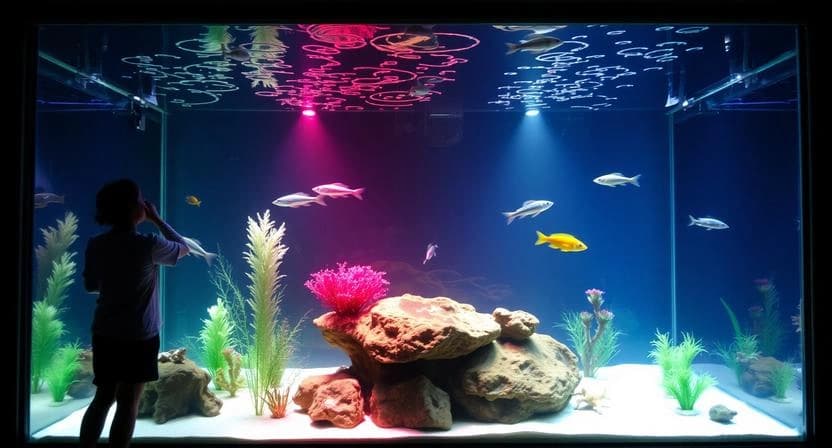
When setting up your timer, choose on and off times that align with your household schedule. Many aquarists prefer having lights turn on in the morning and off in the evening, roughly matching natural daylight patterns. However, you can shift this schedule to match when you're home if you want to enjoy your aquarium during peak viewing hours. The specific times matter less than maintaining consistency day after day.
Smart aquarium lighting systems take automation to the next level with programmable intensity ramps, spectrum adjustments, and cloud-based scheduling.
These advanced controllers can simulate sunrise and sunset transitions, provide midday intensity peaks, and even adjust for seasonal variations if desired. While not necessary for basic aquarium success, smart lighting systems offer convenience and fine-tuned control for serious hobbyists.
Once you establish a lighting schedule, resist the temptation to frequently adjust it. Your aquarium needs several weeks to adapt to any new schedule before you can accurately assess whether it's working.
Making constant changes prevents you from identifying the true effects of each adjustment. If you must modify your schedule, change duration in small increments of 30 minutes to one hour and wait at least two weeks before making further adjustments.
Common Mistakes to Avoid with Aquarium Lighting Timing
Even experienced aquarists sometimes fall into lighting pitfalls that undermine their aquarium's health. Being aware of these common mistakes helps you avoid setbacks and maintain optimal conditions for your aquatic community.
One frequent error is leaving aquarium lights on continuously or for excessively long periods because you want to enjoy your tank throughout the day.
Some beginners think that more light will make plants grow faster or colors appear brighter, but this approach invariably leads to overwhelming algae problems. Fish and plants need darkness just as much as they need light, and denying them rest periods causes stress and poor health.
Inconsistent scheduling represents another major mistake that disrupts your aquarium's biological rhythms. Turning lights on and off at random times, or frequently changing the schedule to match your varying routine, prevents fish and plants from establishing stable circadian patterns.
This inconsistency can suppress immune function, reduce feeding responses, and make your entire tank more vulnerable to disease and instability.
Many aquarists fail to account for natural sunlight when planning their lighting duration. Tanks near windows receive supplemental light that counts toward total daily exposure.
Ignoring this natural light contribution and running full artificial lighting schedules results in excessive total light duration. Always consider your tank's location and ambient light conditions when setting timer schedules.
Using old, degraded bulbs or LEDs while maintaining the same duration is problematic because aging lights shift their spectrum and lose intensity. What worked perfectly with new bulbs may provide insufficient light as they age, leading aquarists to extend duration to compensate.
The better solution is replacing bulbs or upgrading fixtures rather than extending photoperiods beyond recommended ranges.
Balancing Light Duration with Other Tank Maintenance Practices
Your lighting schedule doesn't exist in isolation but works together with all other aspects of aquarium maintenance to create a healthy environment. Understanding how light duration interacts with feeding, water changes, and filtration helps you optimize your entire aquarium system.
Feeding schedules should coordinate with your lighting periods. Fish feed most actively during lit hours when they can see food clearly. Feeding during darkness wastes food and pollutes water since uneaten portions decay quickly.
Most aquarists feed once or twice daily during the middle portion of the photoperiod, giving fish time to actively search for food under good lighting conditions.
Water change frequency and thoroughness can compensate for less-than-perfect lighting duration. If you're struggling with minor algae issues despite reasonable light duration, increasing water change frequency removes excess nutrients that fuel algae growth. Regular 20 to 30 percent weekly water changes help maintain the nutrient balance that allows plants to outcompete algae regardless of light duration.
Filtration capacity affects how much waste accumulates in your water, which in turn influences algae growth potential. Strong biological filtration processes fish waste efficiently, keeping nutrient levels lower and reducing the algae-promoting effects of any given light duration. Combining appropriate light timing with robust filtration creates a one-two punch against unwanted algae.
Carbon dioxide supplementation in planted tanks changes the equation for optimal light duration. When you inject CO2, plants can photosynthesize more efficiently and grow faster. Tanks with CO2 injection can often handle slightly longer photoperiods than non-injected tanks because plants use the extra light productively rather than leaving it available for algae. Coordinate CO2 injection to run only during lit periods for maximum efficiency and safety.
Proper aquarium lighting duration forms the foundation of a healthy, beautiful aquatic environment that brings joy every time you observe it.
By understanding the science behind light cycles, following species-specific recommendations, and maintaining consistent schedules, you create conditions where fish feel secure and plants flourish naturally.
Remember that finding your tank's perfect light duration may require some experimentation and patience, but the results are worth the effort.
Pay attention to what your aquarium tells you through algae growth, plant health, and fish behavior, and adjust accordingly while giving each change sufficient time to show results.
With thoughtful lighting management integrated into your overall maintenance routine, your aquarium will reward you with vibrant colors, healthy growth, and a stable ecosystem that thrives year-round.