
How to Increase Water Flow Without Buying a New Filter

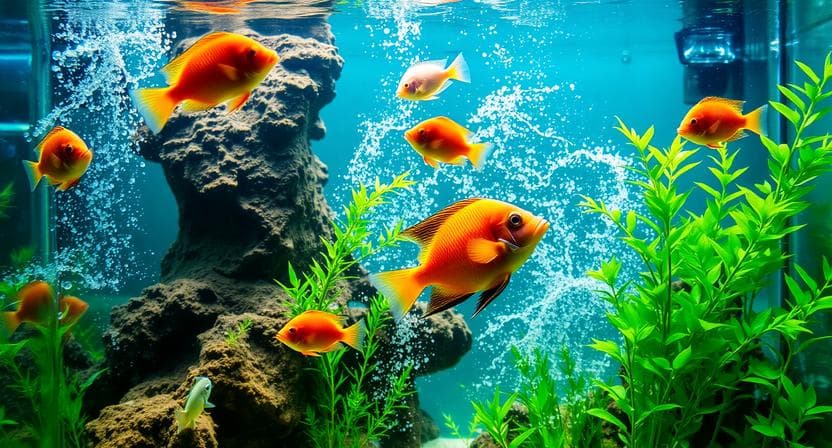
To increase water flow in your aquarium without buying a new filter, focus on optimizing your existing equipment through strategic repositioning, thorough cleaning, targeted additions like powerheads, and thoughtful tank rearrangements.
These practical steps enhance circulation, boost oxygen levels, and prevent waste buildup, all while keeping your setup cost-effective and fish-friendly.
You will notice immediate improvements in water clarity and inhabitant activity once proper movement is restored. Stagnant areas can quickly lead to low oxygen pockets and uneven nutrient distribution, stressing your aquatic ecosystem.
By addressing circulation proactively, you create a healthier environment that supports vibrant fish, active invertebrates, and thriving plants.
Understanding the mechanics behind water movement empowers you to make informed tweaks rather than relying on expensive upgrades. Each adjustment builds upon the last, compounding the overall effectiveness of your filtration system. With consistent attention, you maintain strong flow even as your tank matures over months and years.
Proper circulation influences every aspect of aquarium health, from temperature stability to biological filtration efficiency.
When you increase water flow thoughtfully, you replicate natural river or reef conditions more closely, giving your livestock the dynamic habitat they deserve.
Why Water Flow Matters in Your Aquarium
Water movement plays a fundamental role in maintaining balance within your tank. When you increase water flow effectively, you support essential processes that keep the environment stable and life thriving. Poor circulation often goes unnoticed until problems emerge, making early intervention key to long-term success.
How Flow Affects Oxygen Levels
Oxygen exchange happens primarily at the surface, where water meets air. Strong currents bring oxygen-depleted water from the bottom up to the top while pushing oxygenated surface water downward.
This continuous cycling prevents hypoxic zones that can suffocate sensitive species during warmer months or in heavily stocked systems.
You should aim for gentle surface agitation that creates small ripples without splashing water out of the tank.
In deeper setups, this exchange becomes even more critical because natural diffusion alone cannot reach lower levels adequately. Monitoring dissolved oxygen levels with a simple test kit helps confirm that your efforts are paying off.
Plants and beneficial bacteria also rely on consistent oxygenation to perform their roles efficiently. When flow improves, you often see faster plant growth and more stable parameters overall. This creates a positive feedback loop where healthier biology further enhances water quality.
How Flow Affects Waste Distribution
Fish waste, uneaten food, and organic debris tend to settle in low-flow areas if circulation remains weak.
By increasing water flow, you keep particles suspended longer so your filter can capture them before they decompose and release harmful compounds.
This distribution prevents localized spikes in ammonia or nitrates that could otherwise stress your inhabitants. Even distribution also ensures that beneficial bacteria throughout the system receive steady supplies of nutrients to process.
Signs of Poor Circulation in a Tank
Look for patches of algae growing more vigorously in certain spots while others remain clean. Fish that congregate near the surface or hide excessively may be seeking better-oxygenated water.
Detritus piles forming behind rocks or in corners signal dead zones that need immediate attention.
Cloudy water that persists despite regular maintenance often points to inadequate movement rather than simple overfeeding. You might also notice temperature stratification where the bottom feels noticeably cooler than the surface layers.
How to Increase Water Flow With Your Existing Filter
Your current filter already possesses significant potential that often remains untapped. Simple modifications to how it operates can dramatically improve overall performance without additional purchases.
These changes require minimal investment yet deliver noticeable results within hours of implementation.
Start by evaluating your filter's maximum rated flow and comparing it against your tank volume. Manufacturers typically recommend turning over the tank volume several times per hour, but real-world conditions frequently reduce this efficiency. Understanding this baseline guides your optimization efforts.
Experiment with different configurations over a few days while observing inhabitant behavior and water clarity. What works best often depends on your specific livestock, aquascape, and tank dimensions.
Patience during this tuning phase prevents over-correction that could stress sensitive species.
Adjusting Filter Placement and Positioning
Filter placement significantly influences how effectively water moves throughout the entire volume. Strategic positioning creates complementary currents that eliminate stagnant pockets. You gain better control by treating the filter outlet as a directional tool rather than a fixed feature.
Repositioning the Filter Outlet
Direct the outflow toward the opposite end of the tank to create a circular pattern that encompasses the full length. Angling it slightly downward pushes water along the substrate where debris tends to accumulate. Small adjustments of just a few degrees can transform weak areas into well-circulated zones.
Angling the Flow Across the Tank
Diagonal flow patterns often prove more effective than straight-line movement for rectangular tanks. This approach reaches corners that vertical or horizontal streams might miss.
You can use adjustable nozzles or even DIY baffles made from aquarium-safe materials to fine-tune directionality.
Avoiding Dead Zones Behind Decor
Large decorations frequently block flow unintentionally when placed directly in the main current path. Position rocks and driftwood to channel water around them rather than creating barriers.
Leaving small gaps between hardscape elements allows currents to penetrate deeper into the aquascape.
Cleaning and Maintaining Your Filter for Better Performance
Regular maintenance restores lost flow capacity that builds up gradually over weeks. Many aquarists underestimate how much debris reduces impeller efficiency until they perform a deep clean. Consistent schedules prevent major drops in performance.
Begin by rinsing mechanical media in tank water to preserve beneficial bacteria colonies. Avoid tap water or harsh scrubbing that could crash your biological cycle.
Focus instead on removing visible sludge while keeping the core filtration biology intact.
Check impeller assemblies for string, plant bits, or calcium buildup that slows rotation. A quick brush or soak in vinegar solution often revives sluggish motors. Lubricating moving parts according to manufacturer guidelines extends equipment life considerably.
Using Powerheads and Wave Makers to Boost Circulation
Powerheads provide targeted flow that complements rather than replaces your main filter. These compact devices excel at fixing specific problem areas while adding beneficial random currents. When chosen and placed correctly, they create a more natural reef-like environment.
Choosing the Right Powerhead Size
Select units rated for your tank volume with adjustable flow settings for flexibility. Smaller tanks benefit from lower GPH models that avoid creating excessive turbulence.
Larger systems may require multiple smaller units instead of one oversized device to prevent strong linear currents.
Positioning a Powerhead for Even Distribution
Mount powerheads midway up the tank wall and aim them across the length rather than directly at the glass. Alternating directions between units creates intersecting currents that reach all levels.
Timer-based operation or wavemaker controllers add natural pulsing patterns that many fish species prefer.
Combining Powerheads With Your Main Filter
Use your primary filter primarily for mechanical and biological filtration while letting powerheads handle broad circulation.
This division of labor maximizes efficiency and reduces strain on individual components. You achieve superior results by coordinating both systems rather than relying on one alone.
Rearranging Decor and Plants to Improve Water Movement
Your hardscape and planting layout directly impacts natural flow patterns. Strategic rearrangements can transform a stagnant tank into one with lively currents.
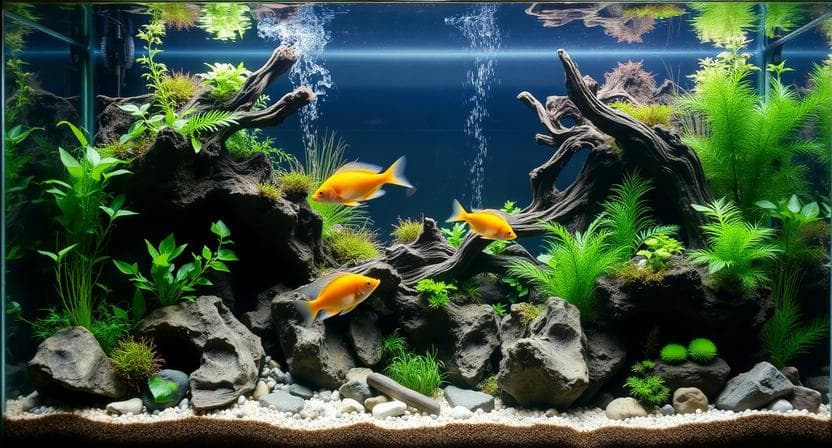
This process also refreshes the visual appeal while solving circulation issues simultaneously.
Tall plants or dense clusters often impede water when placed against the filter outflow. Spreading them out creates channels that guide movement deeper into the foliage. Open swimming lanes in the center encourage both fish activity and better distribution of nutrients.
Reducing Substrate and Media Clogging
Substrate and filter media accumulate fine particles over time, restricting flow. Proactive management keeps everything functioning at peak capacity.
These maintenance tasks become easier once incorporated into your regular routine.
Cleaning Filter Media Without Killing Bacteria
Perform partial cleanings rather than full resets to maintain biological stability. Rinse one section at a time in old tank water during water changes.
This approach preserves the majority of your established bacteria while restoring mechanical efficiency.
Preventing Substrate Buildup Near Intakes
Elevate intake tubes slightly above the substrate or add pre-filters to catch larger debris. Gentle vacuuming during water changes prevents excessive accumulation around intake areas. Fine sand substrates require more frequent attention than coarser gravel options.
Checking Tubing and Intake Blockages
Flexible tubing can kink or accumulate slime layers internally. Regular inspection and replacement when necessary maintain maximum flow rates. Transparent tubing makes visual checks straightforward and helps identify issues before they become severe.
Simple DIY Adjustments to Boost Circulation
Creative solutions using common household or aquarium items often solve stubborn flow problems effectively. These low-cost modifications demonstrate how small changes create meaningful improvements.
Experimentation leads to customized setups perfectly suited to your unique tank.
Consider adding air stones connected to small air pumps for supplemental surface agitation and oxygenation. DIY spray bars made from PVC tubing can distribute outflow from your filter more evenly across the tank width. Even simple deflector plates positioned strategically redirect currents into problem corners.
Common Mistakes That Reduce Water Flow Over Time
Many aquarists inadvertently limit circulation through well-intentioned but counterproductive habits. Overcrowding with decorations ranks among the most frequent issues.
Similarly, allowing media to become completely clogged before cleaning drastically reduces performance.
Using intake sponges that are too fine can restrict flow prematurely. Positioning filters in corners without considering overall tank dynamics often creates large dead zones on the opposite side.
Recognizing these patterns helps you avoid them proactively in your own maintenance schedule.
By addressing these common pitfalls and implementing the strategies outlined here, you will successfully increase water flow and create a more vibrant, healthy aquarium.
Your fish will display more natural behaviors, plants will grow more robustly, and water parameters will remain more stable with less intervention.
Share this guide with fellow aquarists who might be struggling with similar circulation challenges in their tanks.
What adjustments have you found most effective for improving flow in your own setups? Feel free to leave your experiences in the comments so we can continue learning together.