
How to Lower Nitrate Levels in Your Aquarium Naturally

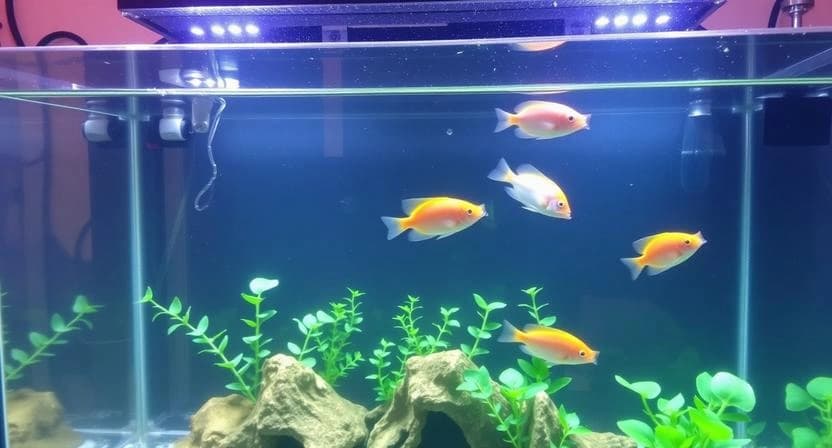
Learning how to lower nitrate levels in your aquarium naturally is essential for maintaining a healthy aquatic environment for your fish and plants.
The most effective natural methods to reduce nitrates include performing regular water changes, adding live aquatic plants, reducing feeding amounts, maintaining proper filtration, and avoiding overstocking your tank.
These strategies work together to create a balanced ecosystem that keeps nitrate levels within safe ranges without requiring chemical additives.
High nitrate concentrations can stress your fish, weaken their immune systems, and promote excessive algae growth that clouds your water and disrupts the visual appeal of your aquarium.
By implementing natural nitrate control methods, you create a sustainable system that mimics the balance found in natural aquatic habitats. Understanding how nitrates accumulate and how to manage them gives you the foundation for long-term success in fishkeeping.
The good news is that controlling nitrates doesn't require expensive equipment or complicated procedures. Simple maintenance routines and thoughtful aquarium management can dramatically improve water quality and create a thriving environment for your aquatic life.
Whether you're managing a freshwater community tank or a planted aquarium, these natural approaches provide safe and effective solutions.
Understanding Nitrates in Your Aquarium
Nitrates represent the final stage of the nitrogen cycle in your aquarium, and understanding their role helps you maintain optimal water quality. Unlike ammonia and nitrite, which are highly toxic even at low concentrations, nitrates are less immediately harmful but still require careful monitoring.
They accumulate gradually over time as a byproduct of biological filtration, making regular management essential for aquarium health.
The presence of nitrates in your tank is actually a sign that your biological filtration is working properly. When beneficial bacteria break down toxic ammonia and nitrite, they convert these substances into nitrate as the end product.
However, nitrates don't disappear on their own in a closed aquarium system. Without intervention, they continue to build up with each feeding and every bit of organic waste that decomposes in your tank.
Different aquarium setups tolerate varying nitrate levels, but all systems benefit from keeping concentrations as low as reasonably possible. Freshwater fish generally handle moderate nitrate levels better than sensitive marine species or certain delicate freshwater varieties.
The key is establishing a baseline understanding of what nitrates are and how they fit into your aquarium's ecosystem.
What Are Nitrates and How Do They Form
Nitrates are nitrogen compounds with the chemical formula NO3 that form as the final product of biological filtration in aquariums. They develop when beneficial bacteria called Nitrobacter convert nitrite, a toxic intermediate compound, into the relatively less harmful nitrate form.
This conversion process occurs continuously in established aquariums wherever beneficial bacteria colonies exist.
The formation of nitrates begins when fish produce waste, uneaten food decomposes, and plant matter breaks down in your tank. All these organic materials release ammonia into the water.
Beneficial Nitrosomonas bacteria then convert this ammonia into nitrite, which is still highly toxic to fish. Finally, Nitrobacter bacteria complete the cycle by transforming nitrite into nitrate.
Understanding this formation process helps you recognize that every feeding, every fish waste product, and every decaying leaf contributes to nitrate accumulation. While you cannot stop nitrates from forming in an active aquarium, you can manage the rate at which they accumulate through proper care practices.
The Nitrogen Cycle and Nitrate Accumulation
The nitrogen cycle is the cornerstone of biological filtration that makes fishkeeping possible in closed aquatic systems. This natural process involves beneficial bacteria breaking down toxic waste products into progressively less harmful forms.
The cycle begins with ammonia production and ends with nitrate accumulation, creating a continuous loop that requires your intervention to complete.
In a newly established aquarium, the nitrogen cycle takes several weeks to fully develop as bacterial colonies grow and stabilize. During this cycling period, ammonia and nitrite levels spike before beneficial bacteria populations become large enough to process these compounds efficiently.
Once established, the system converts waste into nitrates relatively quickly, which is why nitrate levels rise steadily in mature tanks.
Nitrate accumulation differs from ammonia and nitrite because most aquariums lack the anaerobic bacteria needed to convert nitrates into nitrogen gas. In natural water bodies, these specialized bacteria thrive in oxygen-poor environments like deep substrate or dense plant roots.
Without these conditions, nitrates simply accumulate until you remove them through water changes or plant uptake.
Safe Nitrate Levels for Different Aquarium Types
Determining safe nitrate levels depends on the type of aquarium you maintain and the species you keep. Freshwater community tanks typically tolerate nitrate levels up to 40 parts per million without immediate harm to hardy fish species.
However, keeping levels below 20 ppm creates a healthier environment and reduces stress on all inhabitants. Sensitive species like discus or crystal shrimp require even lower concentrations, ideally under 10 ppm.
Saltwater aquariums demand stricter nitrate control because marine organisms generally tolerate less pollution than freshwater species. Reef tanks with corals should maintain nitrate levels below 5 ppm, while fish-only marine systems can function with levels up to 20 ppm.
The more sensitive your livestock, the lower you should keep your nitrate concentrations.
Planted aquariums represent a special case where moderate nitrate levels actually benefit growth. Many aquatic plants use nitrates as a primary nitrogen source for photosynthesis and development. In heavily planted tanks, you might maintain nitrate levels between 10 and 20 ppm to ensure plants receive adequate nutrients while still protecting fish health.
Why High Nitrate Levels Are Harmful to Fish
High nitrate concentrations create chronic stress that weakens fish immune systems and makes them vulnerable to disease. While nitrates aren't immediately lethal like ammonia or nitrite, prolonged exposure to elevated levels causes subtle but significant health problems.
Fish living in high-nitrate environments show reduced growth rates, decreased reproductive success, and increased susceptibility to bacterial and parasitic infections.
When nitrate levels climb above safe thresholds, fish experience physiological stress that affects their ability to regulate body fluids and maintain proper organ function.
The stress response triggers the release of cortisol, which suppresses the immune system over time. This immunosuppression leaves fish defenseless against pathogens that healthy fish could normally resist, leading to recurring health issues that seem to appear without obvious cause.
Beyond direct health impacts on fish, excessive nitrates fuel problem algae growth that degrades water quality and aquarium aesthetics. Algae blooms consume oxygen during nighttime hours, potentially creating dangerous oxygen depletion in poorly aerated tanks.
The combination of stressed fish and poor water quality creates a downward spiral that becomes increasingly difficult to reverse without aggressive intervention.
Young fish and fry are particularly vulnerable to nitrate toxicity because their developing organ systems cannot handle the same pollution levels as adult specimens.
Breeding programs often fail in high-nitrate environments because eggs don't develop properly or fry experience high mortality rates. Maintaining low nitrate levels becomes even more critical when attempting to raise baby fish or condition breeding pairs.
Regular Water Changes for Nitrate Control
Water changes represent the most direct and reliable method for removing nitrates from your aquarium system. This simple maintenance task physically removes contaminated water and replaces it with fresh, nitrate-free water from your tap or prepared source.
Unlike biological or chemical filtration methods that convert substances from one form to another, water changes actually remove waste products from your system entirely.
The effectiveness of water changes for nitrate control depends on both the volume of water replaced and the frequency of changes. A single large water change provides immediate relief from high nitrate levels but doesn't address the ongoing accumulation that occurs between maintenance sessions.
Conversely, small frequent changes may not remove enough contaminated water to keep pace with nitrate production in heavily stocked tanks.
Establishing a consistent water change routine creates stability in your aquarium parameters and prevents the gradual nitrate creep that catches many fishkeepers by surprise.
Fish adapt better to stable conditions than to fluctuating parameters, even if those parameters occasionally spike before correction. Regular maintenance becomes a cornerstone habit that supports all other aspects of successful fishkeeping.
How Water Changes Remove Nitrates
Water changes remove nitrates through simple dilution by replacing a portion of contaminated aquarium water with clean water containing zero or very low nitrate levels.
When you remove 25 percent of your tank water during a water change, you also remove 25 percent of the dissolved nitrates along with it. The fresh water you add contains minimal nitrates, instantly lowering the overall concentration in your aquarium.
The mathematics of dilution means that regular smaller water changes often prove more effective than infrequent large ones for maintaining stable low nitrate levels.
If your tank contains 40 ppm nitrates and you perform a 50 percent water change with water containing 0 ppm nitrates, you immediately reduce the tank concentration to 20 ppm. However, nitrates begin accumulating again immediately after the water change, so timing and frequency matter as much as volume.
The nitrate level in your source water significantly impacts the effectiveness of water changes for nitrate reduction. Some municipal water supplies contain nitrates from agricultural runoff or natural sources, sometimes measuring 20 ppm or higher straight from the tap.
In these cases, water changes still help but cannot reduce tank nitrates below the level present in your source water without additional treatment.
Determining the Right Water Change Schedule
Creating an effective water change schedule requires balancing your tank's bioload, filtration capacity, and the sensitivity of your fish species. Lightly stocked tanks with efficient filtration and live plants might maintain safe nitrate levels with weekly 25 percent water changes.
Heavily stocked tanks or those without plants often need twice-weekly changes of 30 to 50 percent to keep nitrates in check.
Testing your water regularly helps you understand how quickly nitrates accumulate in your specific setup. Measure nitrate levels immediately after a water change, then test again three to four days later to see how much concentration has increased.
This pattern reveals your tank's nitrate production rate and helps you determine whether your current water change schedule provides adequate control.
Most successful fishkeepers settle into a weekly water change routine as a practical compromise between maintenance effort and water quality benefits. Weekly changes of 25 to 30 percent work well for typical community tanks with moderate stocking levels.
You can adjust this baseline schedule based on your test results and fish behavior, increasing frequency or volume if nitrates climb too high.
Best Practices for Effective Water Changes
Performing water changes correctly maximizes their effectiveness while minimizing stress on your fish and disruption to beneficial bacteria colonies. Always treat new water with dechlorinator before adding it to your tank, as chlorine and chloramine in tap water kill beneficial bacteria and harm fish.
Temperature-matching the new water to your tank temperature prevents shocking fish with sudden temperature swings.
Using a gravel vacuum during water changes provides the added benefit of removing organic debris from the substrate where much of your nitrate production originates.
Vacuuming substrates removes uneaten food, fish waste, and decaying plant matter before they fully decompose and contribute to nitrate accumulation. Focus on areas where debris visibly accumulates, such as under decorations or in low-flow zones.
Avoid the temptation to perform massive water changes exceeding 50 percent unless dealing with an emergency situation. Large water changes can destabilize water parameters and stress fish adapted to existing conditions.
Instead, perform multiple moderate water changes over several days if you need to dramatically reduce nitrate levels, allowing fish time to adjust gradually to improving water quality.
Live Plants as Natural Nitrate Absorbers
Live aquatic plants offer one of the most effective and visually appealing methods for controlling nitrate levels naturally. Plants consume nitrates as a primary nitrogen source for growth, essentially acting as living biological filters that continuously remove this compound from your water.
A well-planted aquarium can maintain remarkably low nitrate levels even with moderate fish populations, creating a balanced ecosystem that requires less frequent water changes.
The beauty of using plants for nitrate control is that they provide multiple benefits beyond nutrient absorption. Plants produce oxygen during photosynthesis, provide natural cover and security for fish, and create a more naturalistic environment that reduces stress.
Many fish species display brighter colors and more natural behaviors in planted tanks compared to bare aquariums.
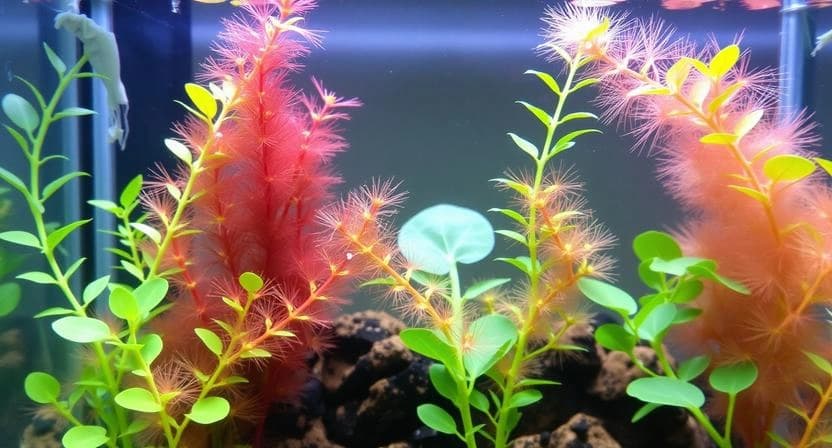
Integrating live plants into your aquarium transforms it from a simple fish container into a dynamic ecosystem where plants and fish support each other. Fish waste provides nutrients for plant growth, while plants purify water and create oxygen for fish respiration.
This symbiotic relationship mirrors natural aquatic environments and creates a more stable, self-regulating system.
How Aquatic Plants Consume Nitrates
Aquatic plants absorb nitrates through their roots and leaves as part of their natural metabolic processes. Plants require nitrogen to synthesize proteins, enzymes, and chlorophyll essential for growth and photosynthesis.
While plants can utilize nitrogen in several forms, many species readily absorb nitrate ions from the water column, making them effective at reducing aquarium nitrate concentrations.
Fast-growing plant species consume nitrates more rapidly than slow-growing varieties because their increased metabolic activity requires more nutrients.
Stem plants that grow several inches per week can remove substantial amounts of nitrates from your system, especially when regularly trimmed to encourage new growth. The trimmed portions represent nitrates permanently removed from your aquarium when you discard them.
The effectiveness of plants for nitrate removal depends on several factors including light intensity, carbon dioxide availability, and the presence of other essential nutrients.
Plants experiencing optimal growing conditions consume nitrates most efficiently. When lacking adequate light or CO2, plants grow slowly and remove fewer nitrates. Creating ideal growing conditions maximizes your plants' ability to control nitrate accumulation.
Best Plants for Nitrate Reduction
Fast-growing stem plants like hornwort, water sprite, and rotala species excel at nitrate absorption because their rapid growth requires substantial nutrient uptake.
These plants often grow several inches weekly under good conditions, consuming significant amounts of nitrates in the process. Hornwort proves particularly useful because it grows well in various conditions and can float or be planted in substrate.
Floating plants like water lettuce, frogbit, and duckweed rank among the most efficient nitrate consumers because they access atmospheric CO2 and receive maximum light exposure.
These plants grow explosively under adequate lighting, sometimes doubling their population within a week. While their vigorous growth makes them excellent for nitrate control, you need to thin floating plant populations regularly to prevent them from blocking light to plants below.
Root-feeding plants like Amazon swords and cryptocorynes primarily absorb nutrients through their root systems, making them effective at processing nitrates accumulated in substrate.
These plants grow more slowly than stem or floating varieties but provide long-term steady nitrate reduction. Combining fast-growing stem plants with slower root-feeding species creates a comprehensive nitrate management system.
Optimizing Plant Growth for Maximum Nitrate Uptake
Providing adequate lighting represents the single most important factor for maximizing plant growth and nitrate consumption. Most aquarium plants require at least six to eight hours of moderate to high intensity light daily to grow vigorously.
LED aquarium lights designed for planted tanks provide the full spectrum needed for photosynthesis. Insufficient lighting causes plants to grow slowly or deteriorate, reducing their ability to absorb nitrates.
Carbon dioxide supplementation dramatically increases plant growth rates in moderate to high-light aquariums, resulting in much greater nitrate removal. Plants use CO2 during photosynthesis to create the energy needed for growth.
While plants can extract some CO2 from the water naturally, adding supplemental CO2 through injection systems or liquid supplements boosts growth substantially. Faster growth means faster nitrate consumption.
Regular fertilization with micronutrients ensures plants don't become deficient in essential elements that limit growth. While nitrates provide nitrogen, plants also need iron, potassium, phosphorus, and various trace elements to thrive.
Using a comprehensive liquid fertilizer or root tabs for heavy root-feeding plants prevents nutrient deficiencies that slow growth and reduce nitrate uptake capacity.
Reduce Feeding to Lower Nitrate Aquarium Levels
Overfeeding ranks among the primary causes of excessive nitrate accumulation in home aquariums. Every pellet or flake you add to your tank eventually becomes waste that contributes to nitrate production.
Uneaten food decomposes quickly, releasing ammonia that beneficial bacteria convert into nitrates. Even food that fish consume still produces waste as fish digest and excrete it, adding to the nitrogen load in your system.
Most fishkeepers feed their fish more than necessary out of concern for their pets' wellbeing or simply for the enjoyment of watching feeding behavior. Fish have much smaller stomachs relative to their body size than mammals and require surprisingly little food to maintain health.
A good rule suggests feeding only what fish can consume completely within two to three minutes, with any remaining food indicating overfeeding.
Adjusting your feeding practices provides immediate results in controlling nitrate accumulation. When you reduce the amount of organic matter entering your system, you directly reduce the raw materials available for conversion into nitrates.
Combined with other nitrate control methods, proper feeding creates a foundation for maintaining low nutrient levels long-term.
Feeding high-quality foods improves nutrient absorption and reduces waste production compared to low-quality alternatives. Premium fish foods contain more digestible proteins and fewer fillers, meaning fish extract more nutrition and produce less waste per feeding. While quality foods cost more initially, they often prove more economical by reducing waste and improving fish health.
Maintain Proper Filtration and Substrate Cleaning
Mechanical and biological filtration work together to keep your aquarium water clear and process waste efficiently, but they require regular maintenance to function optimally.
Clogged filter media reduces water flow and allows debris to accumulate in the tank, creating pockets of decomposing organic matter that fuel nitrate production. Regular filter cleaning ensures water circulates properly and waste gets trapped before settling in your tank.
Your substrate harbors substantial populations of beneficial bacteria that process ammonia and nitrite, but it also collects organic debris that contributes to nitrate accumulation.
Fish waste, uneaten food, and decaying plant matter settle into substrate crevices where they decompose slowly. Regular substrate vacuuming during water changes removes this debris before it fully breaks down, reducing the total amount of waste entering the nitrogen cycle.
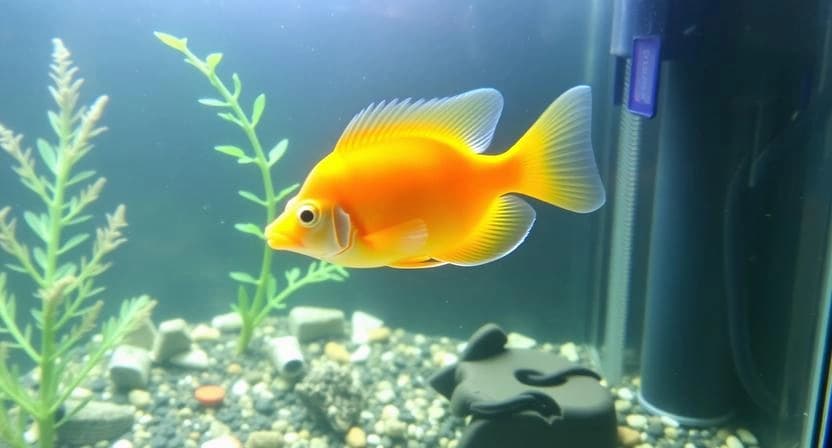
Deep substrate beds can develop anaerobic zones where specialized bacteria convert nitrates into nitrogen gas that escapes the water. However, these zones require several inches of fine substrate and develop slowly over many months.
Most aquariums benefit more from regular substrate cleaning to remove organic debris rather than attempting to create anaerobic zones that may become unstable.
Upgrading filtration capacity helps tanks with heavy fish populations manage waste more effectively. Oversized filters process larger volumes of water and house more beneficial bacteria, improving the rate at which ammonia and nitrite convert to nitrates.
While this doesn't directly remove nitrates, it prevents toxic ammonia and nitrite accumulation and processes waste more efficiently, making water changes more effective at controlling nitrate levels.
Adding Beneficial Bacteria to Your Tank
Beneficial bacteria supplements contain live cultures of nitrifying bacteria that help establish and maintain the nitrogen cycle in your aquarium.
While these products cannot directly remove nitrates in most cases, they ensure efficient conversion of ammonia and nitrite, preventing these more toxic compounds from accumulating.
Some advanced formulations include specialized bacteria strains that consume nitrates under specific conditions.
Regular dosing with beneficial bacteria helps maintain robust bacterial populations, especially after filter cleaning or medication use that might reduce bacterial colonies.
Strong bacterial populations process waste quickly and efficiently, preventing the backup of toxic compounds that stress fish and disrupt tank stability. This efficiency indirectly supports nitrate management by ensuring the nitrogen cycle functions optimally.
Some bacterial supplements contain heterotrophic bacteria that consume organic waste directly, reducing the amount of material that enters the nitrogen cycle.
By breaking down solid waste, uneaten food, and debris more rapidly, these bacteria reduce the raw materials available for conversion into nitrates.
This approach works best when combined with regular maintenance and proper feeding practices.
Specialized anaerobic bacteria products claim to convert nitrates into nitrogen gas, effectively removing them from your system without water changes.
These bacteria require low-oxygen environments to function and work best in deep substrate beds, canister filters with dedicated anaerobic chambers, or specially designed reactors.
Results vary considerably depending on tank conditions and whether suitable anaerobic environments actually develop.
Avoid Overstocking Your Aquarium
Tank stocking density directly impacts nitrate production rates because each fish contributes waste that eventually becomes nitrate. Overstocked aquariums accumulate nitrates much faster than appropriately stocked tanks, often overwhelming even aggressive maintenance routines.
Following proper stocking guidelines based on adult fish size and species requirements helps maintain manageable nitrate levels.
The traditional rule of one inch of fish per gallon provides a rough starting point but fails to account for fish body mass, activity level, and waste production variations between species.
A more reliable approach considers each species' adult size, territorial requirements, and waste output. Researching specific fish needs and planning your stocking accordingly prevents the common mistake of purchasing fish that outgrow your tank or produce excessive waste.
Heavily stocked tanks can remain healthy with diligent maintenance, but they demand more time and effort than moderately stocked systems. If you prefer a lower-maintenance approach, stocking conservatively makes nitrate management much easier.
Fewer fish produce less waste, allowing plants and biological filtration to keep pace with nitrate production more effectively.
Removing fish from an overstocked tank immediately reduces nitrate production and gives you better control over water quality. While emotionally difficult, rehoming excess fish often proves necessary when persistent water quality problems develop.
Many local fish stores accept healthy fish as trade-ins, or you can connect with other hobbyists through aquarium clubs and online forums.
Managing nitrate levels naturally requires combining multiple approaches into a comprehensive maintenance strategy tailored to your specific aquarium.
Water changes remove accumulated nitrates directly while plants consume them continuously as nutrients. Proper feeding prevents excessive waste production, and appropriate stocking keeps bioload within manageable limits.
Together, these practices create a stable aquatic environment where fish thrive and nitrate levels remain safely low without chemical interventions.
By understanding how nitrates form and implementing these natural control methods, you establish a sustainable system that rewards you with healthy, vibrant fish and crystal-clear water that showcases your aquarium at its best.