
What are the signs of low oxygen in a fish tank?

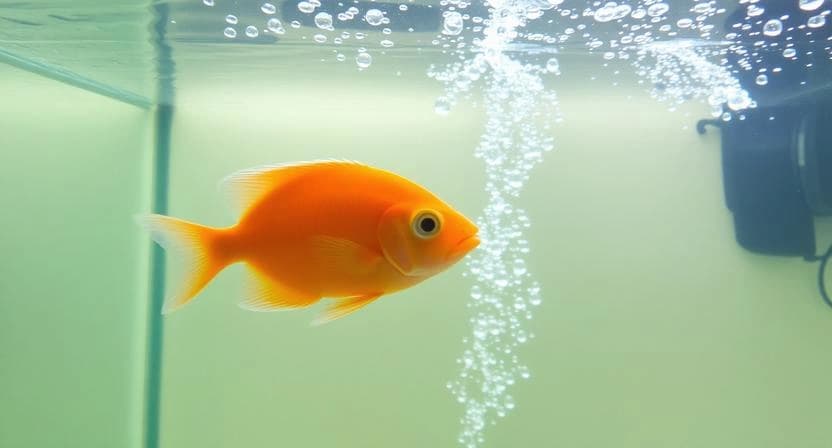
The signs of low oxygen in a fish tank include fish gasping at the surface, increased gill movement, lethargy, loss of appetite, and unusual swimming patterns.
If you notice your fish rushing to the top of the tank to breathe, this is one of the clearest indicators that dissolved oxygen levels have dropped below a healthy range.
Maintaining proper oxygen levels is one of the most important parts of keeping a healthy aquarium. When oxygen becomes scarce, fish begin showing changes you can learn to recognize early.
In this article, you will learn how to spot the signs of low oxygen in a fish tank, understand what causes oxygen depletion, and discover what steps you can take to restore and maintain healthy water conditions.
Introduction to oxygen levels in aquariums
Dissolved oxygen is one of the most critical factors in any aquarium. Fish depend on oxygen dissolved directly into the water to carry out basic functions like respiration. Without adequate levels, even well-kept fish will begin to struggle.
Oxygen enters aquarium water through surface agitation, filter movement, and photosynthesis from live plants. These processes can become insufficient depending on tank size, temperature, and fish population.
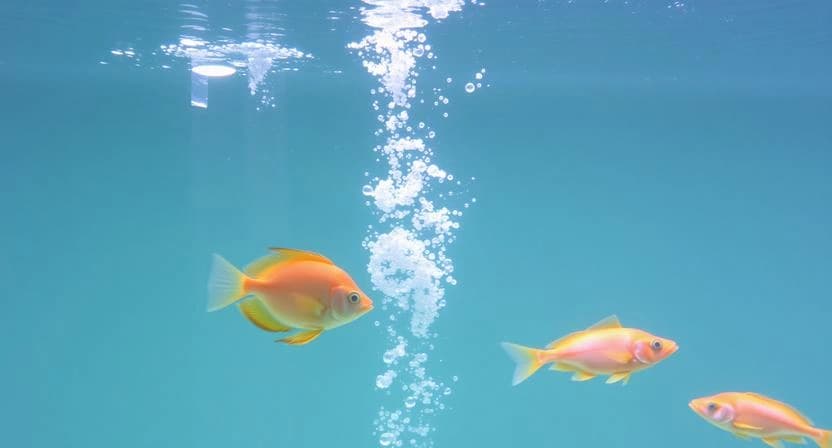
Most freshwater fish thrive when dissolved oxygen sits between 5 and 8 parts per million. Levels below 4 are generally stressful, and below 2 can become dangerous.
Observing your fish daily is one of the simplest ways to gauge oxygen levels. Their behavior offers early clues about water quality, including signs of low oxygen, before a problem becomes severe.
Understanding the signs of low oxygen in a fish tank
Recognizing the signs of low oxygen in a fish tank is an essential skill for every aquarium keeper. Fish express stress through specific behaviors and physical changes, and symptoms range from subtle early on to obvious as the shortage worsens. Some signs overlap with other water quality issues, but when multiple signs appear together, low oxygen is likely the culprit.
Fish gasping at the water surface
Fish gasping repeatedly at the surface is one of the most recognizable signs of low oxygen in a fish tank. When dissolved oxygen drops, fish move toward the top where air contact raises oxygen levels slightly, and if several fish are doing this at the same time, the tank is almost certainly running low.
Increased gill movement and respiratory rate
Normally, a fish's gills open and close at a calm, steady pace, but when oxygen falls they breathe faster to extract more from the water. Watch closely during a quiet part of the day, and if gill flaps are moving much quicker than usual across multiple fish, oxygen levels have likely declined.
Lethargy and reduced activity levels
Healthy fish swim actively and explore their environment, but when oxygen becomes scarce they conserve energy by slowing down, often drifting near the bottom or resting on surfaces. Persistent lethargy across several fish points clearly to an oxygen problem.
Loss of appetite and feeding behavior changes
Fish struggling with low oxygen often stop eating because breathing takes priority. Food may settle untouched or be ignored entirely, and if this persists over a full day or two it is another sign that your water conditions need correction.
Behavioral changes indicating oxygen deficiency
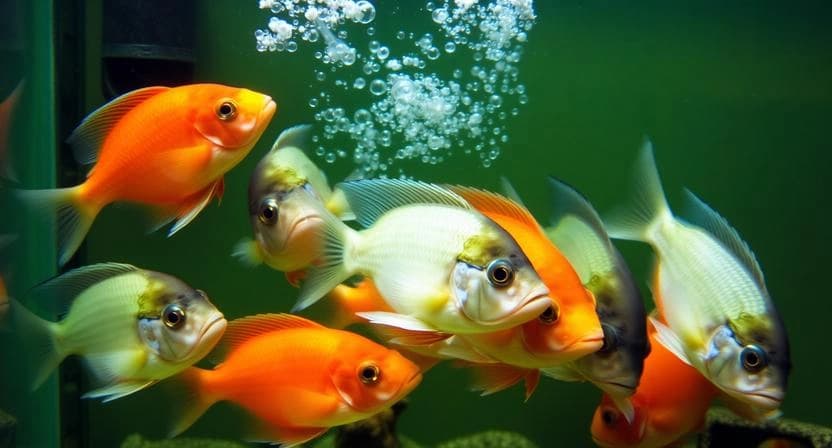
Fish show distinct behavioral shifts as oxygen levels fall, going beyond the initial symptoms described above. These are mostly instinctive survival responses as your fish search for areas where oxygen is more available, and they are often easier to spot than physical symptoms.
Fish gathering near filters or air stones
When oxygen drops, fish congregate around filters and air stones because moving water holds more dissolved oxygen. Sudden clustering around your filter outlet, when fish are normally spread across the tank, is a clear sign that oxygen elsewhere has become insufficient.
Unusual swimming patterns and positioning
Under low oxygen, healthy fish lose their smooth swimming patterns and may dart erratically, swim in tight circles, or spend far more time near the surface. When multiple fish exhibit this stressed behavior simultaneously, the tank needs prompt attention.
Increased aggression or stress among fish
Peaceful fish may turn aggressive when oxygen falls because the environmental stress makes them more territorial. Fin nipping, chasing, and other confrontational behaviors are common responses. Once healthy oxygen levels return, this tension typically resolves on its own without other changes needed.
Physical symptoms of hypoxia in aquarium fish
Hypoxia occurs when oxygen drops too low to support normal health. At this stage, fish show visible physical changes beyond behavioral shifts, and these symptoms usually appear after behavioral changes have already been present, meaning the situation may already be progressing.
Color changes and pale gills
Healthy fish display rich, vibrant color, but when oxygen drops significantly they begin to look paler, especially around the gills. Washed-out gill color indicates that blood is not carrying oxygen efficiently, and this fading combined with other symptoms calls for quick action.
Gasping and labored breathing
Gasping can escalate from a behavioral sign into visible physical distress, with fish heaving their whole body on each breath rather than just the gills moving. This level of respiratory effort means your fish are struggling to extract the oxygen available, and improving water oxygenation should become your immediate focus.
Weakness and difficulty maintaining balance
In advanced cases, fish may list to one side, sink, or lose the ability to swim upright because their muscles and nervous system cannot get enough oxygen. This symptom signals that water conditions must be corrected right away.
Environmental indicators of low dissolved oxygen
You can also look at the water and tank environment for clues. An oily or filmy layer on the surface reduces gas exchange between the water and the air, which gradually lowers dissolved oxygen over time.

Water temperature plays a significant role as well. Warmer water holds less dissolved oxygen, so a recent temperature rise from a heater issue or seasonal change may be contributing to lower levels in your tank.
Unusual algae growth or a shift in water clarity, paired with reduced fish activity, can suggest that oxygen-consuming processes are outpacing production in the tank.
Weaker-than-normal filter output or unusually still water in parts of the tank may indicate that reduced circulation is preventing oxygen from spreading evenly.
Causes of oxygen depletion in fish tanks
Knowing why oxygen levels drop helps you fix the root cause. Overcrowding is among the most common reasons, as too many fish in a small tank consume oxygen faster than the water can replenish it.
Poor circulation is another frequent culprit. A weak or clogged filter creates still zones where oxygen stays low, so regular filter maintenance keeps this from becoming a chronic problem.
Decaying organic matter like uneaten food or dead plants consumes oxygen as it breaks down. Removing waste promptly keeps this drain on your water's oxygen supply to a minimum.
Rising water temperature further reduces how much oxygen the water can hold. Even a small increase, combined with an active fish population, can push oxygen into a stressful range.
How to measure fish tank oxygen levels
Direct measurement gives you an objective reading that removes guesswork. Dissolved oxygen test kits use a reagent method: collect a water sample, add solution drops, and match the color to a chart for a parts-per-million reading.
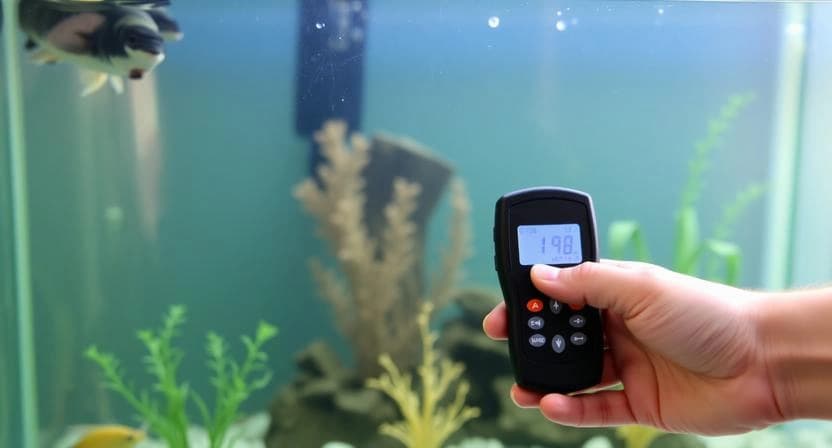
Digital dissolved oxygen meters provide faster, more precise results by placing a probe in the water and reading the display. They are practical for ongoing monitoring or for keepers managing larger setups.
Take readings at different times of day for the most useful information. Oxygen fluctuates with light and plant activity, and morning readings tend to be lower because plants respire all night without producing oxygen.
A baseline reading on a healthy day gives you a useful reference point to compare future readings against, helping you detect changes early.
Immediate actions to increase oxygen in your aquarium
If your tank is low on oxygen, start by increasing surface agitation. Adjusting your filter output or adding an air stone with a small pump moves water more effectively and introduces oxygen far faster than still water does. This is the quickest fix available to you.
A partial water change of 20 to 25 percent replaces depleted water with fresh, oxygenated water. Match the replacement water temperature to your tank to avoid shocking your fish.
Reducing equipment that adds unnecessary heat can also help. If the temperature is above the recommended range, lowering it slightly increases the water's ability to hold dissolved oxygen.
If multiple fish are showing distress, combining these steps will produce faster improvement than any single action alone.
Long-term strategies for maintaining healthy oxygen levels
A properly sized filtration system is one of the best long-term investments you can make. A good filter moves water, promotes gas exchange, and cleans the tank. Keeping the filter media clean ensures it stays effective over time.
Live aquatic plants add oxygen through photosynthesis whenever light is present. Balancing plants, fish, and lighting creates a more self-sustaining system that supports healthy oxygen levels naturally.
Avoid overcrowding as your fish grow. Reassess your tank capacity regularly, and upgrade or rehome fish before the population outstrips what your water can support.
Routine maintenance, including regular water changes and prompt removal of waste, keeps organic matter from steadily consuming your tank's oxygen supply.
Prevention tips for avoiding oxygen problems
Regular water changes every one to two weeks refresh dissolved oxygen and flush out waste that would otherwise consume it. This single habit does more for water quality than almost any other preventive step.
Remove uneaten food after each feeding. Leftover food decomposes and draws oxygen from the water, so clearing excess right away is a quick win.
Watch your water temperature, especially as seasons change. Keeping it within the recommended range for your species ensures the water holds enough oxygen to keep your fish comfortable.
Spend a few minutes each day watching your fish. Early detection of behavioral changes gives you time to investigate and act before a small issue becomes serious.
Keeping your fish tank well-oxygenated is one of the foundations of a healthy aquarium. By learning to spot the signs of low oxygen and taking the right steps to maintain good water quality, you give your fish the best environment possible.
If you noticed any of the signs described here, test your water and make the adjustments that fit your situation. Share what you have learned with fellow aquarium enthusiasts.