
What Causes Cloudy Water in New Aquariums and How to Fix It

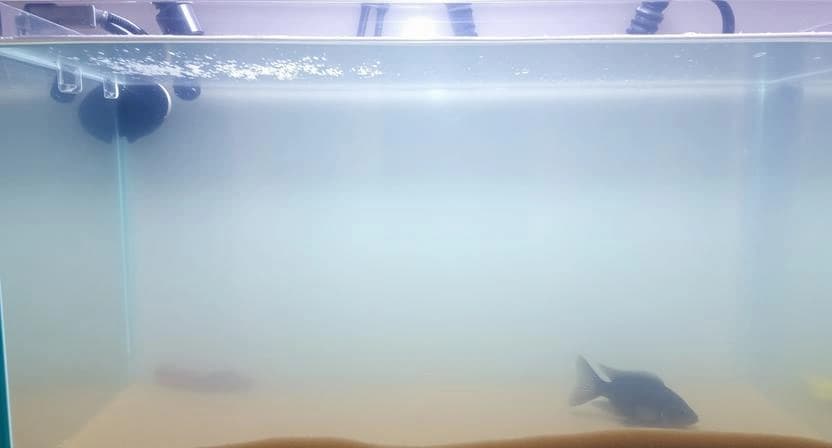
Cloudy water in new aquariums is one of the most common concerns among beginner fishkeepers, and understanding its causes can help you address it effectively.
Cloudy water in new aquariums is typically caused by bacterial bloom, which occurs when beneficial bacteria rapidly multiply during the nitrogen cycle, creating a harmless milky-white appearance that usually clears within a few days to two weeks.
This natural process is actually a sign that your aquarium is developing the biological filtration system necessary to support healthy fish.
While bacterial bloom is the primary culprit, several other factors can contribute to cloudy water in newly established tanks. You might encounter cloudiness from substrate dust, algae growth, or overfeeding, each producing different colors and requiring specific solutions.
The good news is that most cases of cloudy water in new aquariums are temporary and harmless, resolving naturally as your tank matures.
Learning to identify the type of cloudiness you're experiencing and responding appropriately will help you maintain optimal water conditions.
This guide will walk you through the common causes of cloudy water in new aquariums, how to distinguish between different types, and the best practices for prevention and treatment.
Understanding Cloudy Water in New Aquarium Setups
When you set up a new aquarium, the water often appears crystal clear initially, only to turn cloudy within the first few days or weeks.
This cloudiness represents the visible manifestation of microscopic processes occurring in your tank as it transitions from a sterile environment to a living ecosystem.
Understanding what's happening beneath the surface helps you respond appropriately rather than taking unnecessary corrective actions that might disrupt the natural cycling process.
New aquariums lack the established biological filtration that mature tanks possess, making them vulnerable to various forms of cloudiness.
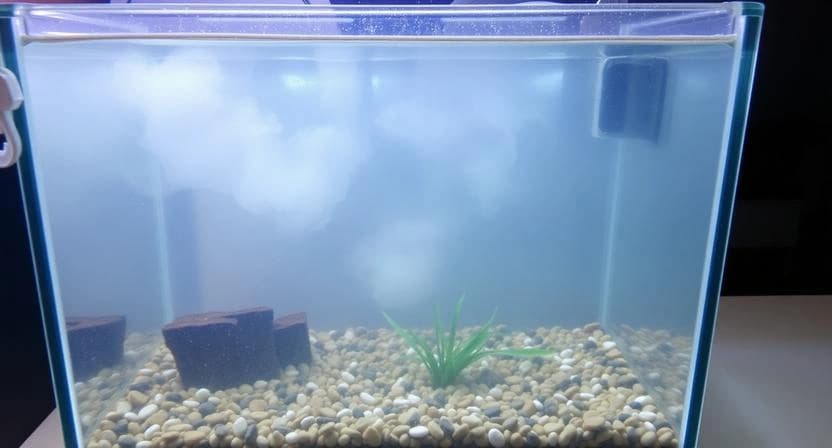
The absence of beneficial bacteria colonies means that waste products, uneaten food, and organic matter have nowhere to go until these microscopic helpers establish themselves.
This period of biological imbalance often manifests as cloudy water, serving as a visual indicator of your tank's developmental stage.
The intensity and duration of cloudiness can vary significantly depending on factors like tank size, filtration capacity, substrate type, and whether you've added fish immediately or allowed the tank to cycle fishlessly.
Smaller tanks with inadequate filtration tend to experience more pronounced cloudiness, while larger, well-filtered aquariums may show only minor haziness. Temperature also plays a role, as warmer water accelerates bacterial reproduction and metabolic processes.
Most aquarium cloudiness in new setups is completely normal and will resolve without intervention as your tank establishes its biological balance. However, recognizing the difference between normal cycling cloudiness and problematic conditions requires careful observation of color, timing, and accompanying symptoms.
Patience is your greatest ally during this phase, as rushing to fix perceived problems often creates more issues than it solves.
What Does Cloudy Aquarium Water Look Like
Cloudy aquarium water can range from a subtle haze that's barely noticeable to an opaque fog that completely obscures your view of fish and decorations.
The cloudiness may appear uniform throughout the tank or concentrate in certain areas, depending on water circulation patterns and the source of the problem.
When you look through the side of your aquarium, you'll notice reduced visibility compared to when you first filled it with fresh water.
The texture of the cloudiness also provides clues about its origin. Bacterial bloom typically creates a milky or opalescent appearance, as if someone added a small amount of milk to the water.
This type of cloudiness often seems to glow slightly when light passes through it, with individual particles too small to see but collectively creating a diffuse haze throughout the water column.
You might also observe that the cloudiness changes in density throughout the day or appears more pronounced after feeding times or water changes.
Some types of cloudiness settle toward the bottom overnight, only to redistribute when your filter or air pump creates water movement in the morning. These patterns help you identify whether you're dealing with suspended particles or living organisms causing the opacity.
Why New Aquariums Are Particularly Susceptible
New aquariums create the perfect conditions for bacterial bloom because they offer abundant nutrients without the established bacterial colonies to consume them efficiently.
When you first add water, substrate, decorations, and especially fish or fish food, you introduce organic compounds that bacteria use as fuel for reproduction. Without competition from established colonies, these bacteria can multiply explosively, creating visible cloudiness within 24 to 48 hours.
The lack of biological equilibrium in new tanks means that ammonia and other nitrogen compounds accumulate faster than beneficial bacteria can process them initially.
This nutrient-rich environment is ideal for heterotrophic bacteria, which reproduce quickly in the water column rather than colonizing surfaces. As these free-floating bacteria multiply by the millions, they create the characteristic cloudy appearance that concerns new fishkeepers.
Fresh substrate is another major contributor to cloudiness in new aquariums. Gravel, sand, and other substrate materials often contain fine dust particles that weren't completely rinsed before addition to the tank.
When you fill the aquarium with water or during the initial days of filtration, these particles suspend in the water column, creating a cloudy appearance that's distinct from bacterial bloom but equally common in new setups.
New filter media also contributes to the susceptibility of new aquariums to cloudiness. Unlike established filter media that harbors dense colonies of beneficial bacteria, new sponges, ceramic rings, or bio-balls are sterile and take time to develop their bacterial populations.
During this establishment period, the filter cannot efficiently remove organic waste or support the nitrogen cycle, allowing conditions that promote cloudiness to persist.
The Difference Between Harmful and Harmless Cloudiness
Not all cloudy water poses the same level of concern for your aquarium inhabitants. Bacterial bloom, while visually unappealing, is generally harmless to fish because it represents beneficial bacteria that will eventually colonize your filter media and substrate.
These bacteria don't directly harm fish, though the underlying conditions that promote their rapid growth, such as excess organic waste, can affect water quality if left unchecked.
Harmless cloudiness typically appears within the first week of setting up a new aquarium and gradually diminishes as the nitrogen cycle progresses.
Your fish will continue eating normally, swimming actively, and showing no signs of distress despite the reduced water clarity. Water parameters like ammonia, nitrite, and pH remain relatively stable, with only the visual appearance of the water being affected.
Harmful cloudiness often accompanies other warning signs like fish gasping at the surface, clamped fins, lethargy, or refusal to eat. This type of cloudiness may result from dangerous algae blooms, severe overfeeding, or decomposing organic matter that's compromising water quality.
Testing your water parameters during these episodes typically reveals elevated ammonia or nitrite levels, indicating that the cloudiness is a symptom of a larger water quality crisis.
Green cloudiness always warrants attention because it indicates an algae bloom rather than bacterial activity. While not immediately toxic, free-floating algae can deplete oxygen levels during nighttime hours and create pH swings that stress fish.
Brown or yellowish cloudiness often results from tannins leaching from driftwood or decaying plant matter, which is generally harmless but may indicate excess organic waste accumulation.
Bacterial Bloom: The Most Common Cause of Cloudy Water in New Aquariums
Bacterial bloom represents the single most frequent cause of cloudy water in new aquariums, affecting nearly every tank during its initial cycling period.
This phenomenon occurs when heterotrophic bacteria, which consume dissolved organic compounds in the water, experience a population explosion due to the sudden availability of nutrients.
Unlike the nitrifying bacteria that colonize filter media and substrate surfaces, these free-floating bacteria remain suspended in the water column, creating the milky appearance that characterizes bacterial bloom.
The bloom typically begins within 24 to 72 hours after adding water, substrate, and especially after introducing fish or fish food to the aquarium.
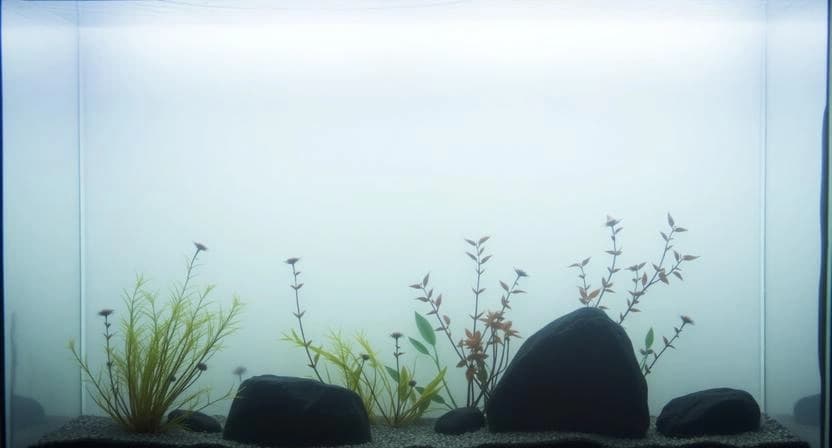
You'll notice the water gradually becoming hazier, progressing from slight cloudiness to an opaque, milk-like consistency over several days. This progression reflects the exponential growth rate of bacteria, with populations doubling every few hours under ideal conditions.
What makes bacterial bloom so prevalent in new aquariums is the combination of abundant nutrients and minimal competition. Fresh dechlorinated water contains dissolved oxygen and trace minerals, while substrate, decorations, and especially fish food introduce organic compounds.
Without established bacterial colonies to maintain balance, opportunistic heterotrophic bacteria rapidly consume these resources and multiply accordingly.
The good news is that bacterial bloom is self-limiting and temporary. As these bacteria consume the available nutrients, their population growth naturally slows.
Additionally, as autotrophic nitrifying bacteria establish themselves on surfaces throughout the tank, they begin outcompeting the heterotrophs for resources, causing the bloom to subside.
Most bacterial blooms resolve completely within one to two weeks without any intervention beyond normal tank maintenance.
How Beneficial Bacteria Create Cloudy Water
Beneficial bacteria create cloudy water not through any harmful process but simply through their sheer numbers in the water column.
Each individual bacterium is microscopic and invisible to the naked eye, but when millions or billions of them float freely in your aquarium water, they collectively scatter and reflect light, creating the characteristic milky haze.
Think of it like fog, where individual water droplets are too small to see, but together they obscure visibility.
These bacteria are heterotrophs, meaning they consume organic carbon compounds like proteins, carbohydrates, and fats that dissolve in aquarium water.
When you add fish food, fish waste, or even just tap water containing trace organic compounds, you provide fuel for these bacteria to reproduce.
Unlike the nitrifying bacteria that process ammonia and nitrite, heterotrophic bacteria reproduce much faster, sometimes doubling their population every 20 to 30 minutes under optimal conditions.
The bacteria remain suspended in the water column rather than attaching to surfaces because they're actively feeding on dissolved nutrients that are evenly distributed throughout the water.
They don't need to colonize your filter media or substrate while abundant food sources float freely around them.
This free-floating lifestyle makes them visible as cloudiness, whereas the surface-attached nitrifying bacteria remain invisible despite being equally important to your tank's health.
As the bacterial population expands, individual cells begin competing for the same nutrients, and the dissolved organic compounds that fueled their initial growth become depleted.
The bacteria also produce waste products that can inhibit further reproduction. Eventually, the population reaches a peak and then crashes as nutrients are exhausted, causing the cloudiness to gradually clear as bacteria die off or get consumed by other organisms in the developing aquarium ecosystem.
The Nitrogen Cycle and Its Role in Water Clarity
The nitrogen cycle is the biological process that converts toxic fish waste into less harmful compounds through the action of beneficial bacteria.
Understanding this cycle helps explain why bacterial bloom occurs and when you can expect your water to clear. The cycle begins when fish produce ammonia through respiration and waste excretion, creating the first nutrient source that triggers bacterial activity in your new aquarium.
During the initial phase of the nitrogen cycle, heterotrophic bacteria bloom in response to the organic compounds and dissolved nutrients in the water.
These are not the same bacteria that process ammonia, but their visible presence indicates that biological activity is beginning in your tank. As they consume dissolved organics, they also help reduce the total organic load in the water, which indirectly supports the establishment of the nitrifying bacteria you're ultimately trying to cultivate.
Nitrifying bacteria work in two groups to complete the nitrogen cycle. Nitrosomonas bacteria convert toxic ammonia into slightly less toxic nitrite, while Nitrobacter bacteria convert nitrite into relatively harmless nitrate.
These bacteria reproduce much more slowly than heterotrophs, taking days or weeks to establish sufficient populations. As they colonize filter media and substrate, they begin processing nitrogen compounds more efficiently, reducing the nutrient availability that sustained the initial bacterial bloom.
The clearing of bacterial bloom often coincides with the establishment of a functioning nitrogen cycle, typically occurring two to four weeks after tank setup.
As nitrifying bacteria populations mature and begin efficiently processing waste, the overall nutrient levels in the water decrease, causing the heterotrophic bacteria population to decline.
This creates a positive feedback loop where improving water quality leads to clearer water, which in turn indicates a healthier, more balanced aquarium ecosystem.
Timeline of Bacterial Bloom Development
The timeline of bacterial bloom follows a predictable pattern in most new aquariums, though exact timing varies based on temperature, nutrient levels, and whether fish are present.
In the first 24 hours after filling your tank, the water typically remains crystal clear as bacteria haven't had time to multiply significantly. You might notice slight cloudiness from substrate dust, but bacterial activity remains minimal during this initial period.
Between 24 and 72 hours after setup, you'll likely notice the first signs of cloudiness as heterotrophic bacteria begin their exponential growth phase. The water may develop a slight haze that becomes progressively more pronounced over the next few days. If you've added fish immediately, the bloom may appear sooner and more intensely due to the additional organic waste and nutrients they provide.
Days four through ten typically represent the peak of bacterial bloom, when cloudiness reaches its maximum intensity. During this period, you may struggle to see through the water from one side of the tank to the other.
Fish may be barely visible, and decorations might appear as vague shadows through the milky haze.
This can be alarming, but it's actually a sign that your tank is progressing through its cycling process normally.
After 10 to 14 days, you should notice gradual improvement in water clarity as the bacterial population begins to decline. The cloudiness will slowly fade, first from the top and bottom of the tank, then throughout the water column. By week three or four, most aquariums have cleared completely, coinciding with the establishment of the nitrogen cycle and the maturation of beneficial bacteria colonies on surfaces throughout the tank.
Other Common Causes of Cloudiness in Newly Established Tanks
While bacterial bloom accounts for most cloudiness in new aquariums, several other factors can contribute to or cause water clarity issues during the initial setup period.
Substrate dust ranks among the most common alternative causes, particularly when gravel or sand hasn't been thoroughly rinsed before being added to the tank.
Even substrates marketed as pre-washed can contain fine particles that suspend in water, creating a cloudy appearance that persists until your filter removes them or they settle to the bottom.
Overfeeding represents another significant cause of cloudiness in new aquariums, especially when enthusiastic new fishkeepers add too much food too frequently.
Uneaten food decomposes rapidly, releasing organic compounds into the water that fuel bacterial growth beyond the normal bloom expected during cycling.
This excess feeding not only intensifies cloudiness but also elevates ammonia levels, creating potentially dangerous conditions for fish during their most vulnerable period in a new tank.
Chemical additives used during tank setup can sometimes cause temporary cloudiness, particularly water conditioners, pH adjusters, or clarifying products added in excessive amounts.
Some tap water sources contain high mineral content that, when combined with certain dechlorinators, can precipitate out of solution and create a white cloudiness. Water conditioners that detoxify heavy metals may also create visible reactions with certain water chemistry profiles.
Inadequate filtration or filter media problems can prolong cloudiness beyond the typical bacterial bloom period. If your filter is undersized for your tank volume, it may not provide sufficient mechanical filtration to remove particles or enough biological filtration to process waste effectively.
New filter media can also release fine particles initially, adding to cloudiness rather than reducing it. Additionally, if water flow is too strong, it may continuously disturb substrate particles, keeping them suspended in the water column.
Distinguishing Between Different Types of Cloudy Water
Identifying the specific type of cloudiness affecting your new aquarium is essential for choosing the appropriate response. Different colors and characteristics indicate distinct causes, each requiring different approaches for resolution. Learning to read these visual cues helps you avoid unnecessary interventions that might worsen the problem or delay your tank's natural cycling process.
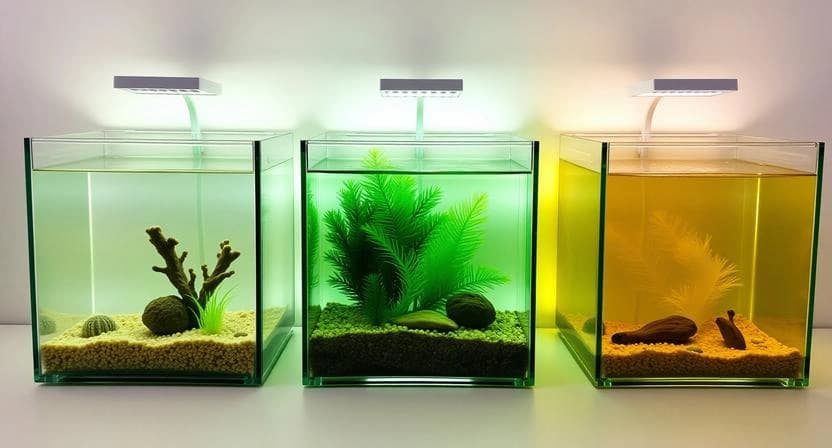
The color of cloudy water provides the first and most obvious clue about its origin. White or gray cloudiness typically indicates bacterial bloom or suspended substrate particles, while green cloudiness always points to algae growth.
Brown or yellow tinted water suggests tannins from driftwood or decomposing plant matter. Each color has specific causes and implications for your tank's health and the actions you should take.
Timing also helps distinguish between different types of cloudiness. Substrate-related cloudiness appears immediately upon filling the tank, while bacterial bloom develops over the first few days.
Algae-related green water typically doesn't appear until week two or later, after nutrients have accumulated and the tank receives adequate light.
Understanding these temporal patterns helps you anticipate what's normal versus what might indicate a problem requiring attention.
The distribution and behavior of cloudiness offers additional diagnostic information. Bacterial bloom appears uniform throughout the water column, while suspended substrate particles may settle overnight and redistribute when the filter runs.
Algae-related cloudiness often concentrates near light sources and may appear more intense after extended periods of lighting. Observing how cloudiness changes throughout the day helps narrow down its cause.
White or Gray Cloudiness
White or gray cloudiness represents the most common appearance in new aquariums and typically results from bacterial bloom or suspended substrate particles.
Bacterial bloom creates a milky, opalescent appearance that remains uniform throughout the tank, with the cloudiness appearing to glow slightly when backlit.
This type of cloudiness develops gradually over several days, reaching peak intensity around day five to seven before slowly diminishing.
Substrate-related white cloudiness tends to have a more granular appearance when examined closely, and it often settles partially overnight when water movement decreases.
If you turn off your filter for an hour, substrate particles will begin settling to the bottom, while bacterial bloom remains evenly distributed. This simple test helps distinguish between the two causes without requiring water testing or other interventions.
The density of white cloudiness can vary significantly based on the severity of the underlying cause. Mild bacterial bloom may create only a slight haze that's noticeable when looking through the length of the tank, while severe blooms can reduce visibility to just a few inches.
Substrate cloudiness is typically most intense immediately after setup and during the first few water changes when the substrate gets disturbed.
White cloudiness from bacterial bloom is generally harmless and will resolve naturally within two weeks. Substrate cloudiness is also harmless but can be minimized through proper rinsing before tank setup and gentle water changes that don't disturb the substrate excessively.
If white cloudiness persists beyond three weeks or is accompanied by odors or fish distress, it may indicate overfeeding or inadequate filtration requiring correction.
Green Cloudiness
Green cloudiness indicates an algae bloom rather than bacterial activity, distinguishing it fundamentally from other types of cloudiness in new aquariums.
Free-floating algae, called phytoplankton, turn the water various shades of green ranging from pale lime to deep emerald depending on the species and density.
Unlike bacterial bloom that develops within the first week, green water typically appears during weeks two through four as algae spores present in tap water or introduced with plants begin to multiply.
Algae require three things to bloom: light, nutrients, and time. New aquariums often provide all three in abundance, with excess nutrients from the cycling process, extended lighting periods, and no established plant or bacterial communities to outcompete the algae.
Direct sunlight near windows dramatically accelerates algae growth, potentially turning water bright green within days. Even without natural light, overly long photoperiods from aquarium lights can trigger green water.
Green cloudiness feels different from bacterial bloom when you observe your tank throughout the day. The green color becomes more vibrant under lighting and may appear to intensify as the day progresses.
If you place a white piece of paper behind the tank, you'll see a distinctly green hue rather than the white or gray appearance of bacterial bloom. The water may also develop a slightly earthy or musty odor as algae populations increase.
While green water isn't immediately toxic to fish, it can cause oxygen depletion during nighttime hours when algae consume oxygen through respiration rather than producing it through photosynthesis.
Severe algae blooms can also create pH swings between day and night, stressing fish. Addressing green cloudiness requires reducing light exposure and nutrient levels rather than simply waiting for it to clear naturally like bacterial bloom.
Brown or Yellow Tinted Water
Brown or yellow tinted water in new aquariums typically results from tannins leaching from driftwood, leaf litter, or certain substrates rather than from bacterial or algae blooms.
Tannins are natural organic compounds that color water similar to tea, creating a range of hues from light amber to dark brown depending on concentration. This type of cloudiness often appears immediately after adding driftwood or within the first few days as tannins begin dissolving into the water.
The intensity of brown or yellow coloration varies based on the type and amount of wood in your aquarium. Malaysian driftwood and mopani wood are particularly notorious for heavy tannin release, sometimes turning water so dark that visibility is severely reduced.
Boiling or soaking wood before adding it to your tank can reduce but not eliminate tannin leaching. Some wood continues releasing tannins for months, requiring patience or activated carbon filtration to manage.
Unlike bacterial bloom that creates opacity, tannin-stained water remains relatively transparent despite its color. You can see through it clearly, but everything appears tinted brown or yellow, like looking through colored glass. This helps distinguish tannin issues from true cloudiness caused by suspended particles or organisms.
The water may also have a slightly earthy or woody smell, different from the odorless or slightly musty scent of bacterial bloom.
Tannin-colored water is completely harmless and even beneficial for certain fish species that naturally inhabit blackwater environments in the wild.
Many aquarists intentionally cultivate tannin-stained water to create naturalistic conditions and slightly acidic pH that benefits species like bettas, tetras, and certain catfish. However, if you prefer crystal clear water, regular water changes and activated carbon filtration will gradually reduce tannin levels over time.
How to Fix Cloudy Water in Your New Aquarium
Addressing cloudy water in your new aquarium requires understanding that most cases resolve naturally without intervention. The best approach is often patience, allowing your tank to complete its cycling process while the beneficial bacteria establish themselves.
Resist the urge to perform large water changes or add chemical clarifiers, as these interventions can disrupt the nitrogen cycle and prolong cloudiness rather than eliminating it.
If you determine that the cloudiness results from substrate dust rather than bacterial bloom, gentle mechanical filtration is your best solution.
Ensure your filter is running continuously and check that water flows through the filter media properly. You can add a fine filter pad or floss to your filter to capture smaller particles more effectively.
Avoid stirring up the substrate during this period, and any cloudiness from substrate particles should clear within 24 to 48 hours of continuous filtration.
For bacterial bloom, maintaining good aquarium practices accelerates natural clearing without disrupting the beneficial processes occurring in your tank.
Feed your fish sparingly, offering only what they can consume within two to three minutes once or twice daily. Avoid adding new fish during the bloom period, as this introduces additional organic waste that prolongs cloudiness.
Continue testing water parameters for ammonia and nitrite, but resist performing water changes unless these values reach dangerous levels.
If cloudiness persists beyond three weeks or intensifies rather than gradually improving, evaluate your tank's fundamental setup. Check that your filter is appropriately sized for your tank volume and running efficiently. Reduce feeding even further if you suspect overfeeding.
Ensure you haven't overcrowded your tank with too many fish too quickly. Sometimes, patience combined with proper maintenance is all that's needed, with the cloudiness clearing suddenly once the biological balance tips in favor of established bacteria colonies.
Preventing Cloudy Water When Setting Up a New Aquarium
Prevention starts before you even fill your new aquarium with water. Thoroughly rinsing substrate is perhaps the single most effective step you can take to minimize initial cloudiness.
Place gravel or sand in a bucket and rinse it under running water, stirring continuously until the water runs clear. This process might take 10 to 15 minutes for gravel and even longer for sand, but the effort prevents days of cloudy water from suspended particles.
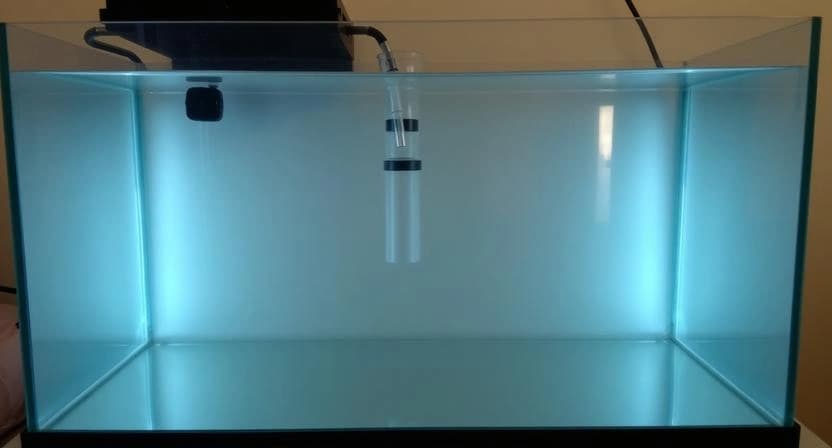
Cycling your tank without fish, known as fishless cycling, significantly reduces the intensity of bacterial bloom while establishing the nitrogen cycle more safely.
You can cycle a tank by adding pure ammonia or fish food to an empty aquarium, allowing beneficial bacteria to colonize before introducing fish.
This approach typically produces milder cloudiness because you can control nutrient levels more precisely than when fish are present and producing waste unpredictably.
Starting with quality filter media and ensuring your filter is properly sized for your tank volume helps prevent cloudiness from inadequate filtration.
Choose a filter rated for at least your tank size, or preferably one rated for a slightly larger tank. Include both mechanical filtration media like sponge or floss to remove particles and biological media like ceramic rings or bio-balls to support beneficial bacteria colonization. Running your filter for several days before adding fish helps seed it with initial bacterial populations.
Consider using bacteria starter products that introduce concentrated beneficial bacteria to your new aquarium. While these products don't eliminate bacterial bloom entirely, they can reduce its intensity and duration by jump-starting the colonization process.
Look for refrigerated products containing live bacteria rather than dried formulations, as they tend to be more effective. Combine bacteria starters with gradual fish introduction and conservative feeding for the best results in preventing severe cloudiness.
The Importance of Patience During the Cycling Process
Patience represents the most valuable trait for successfully navigating your new aquarium through its cycling period and the inevitable cloudiness that accompanies it.
The cycling process cannot be rushed without compromising the establishment of beneficial bacteria colonies that will maintain water quality long-term.
Attempts to accelerate clearing through excessive water changes, chemical additives, or other interventions often backfire by disrupting the delicate biological processes occurring in your tank.
Understanding that cloudiness is temporary and typically harmless helps you maintain patience during the waiting period. Most bacterial blooms peak around day seven and clear completely by day 14, meaning you only need to tolerate reduced visibility for about two weeks.
Compared to the years of enjoyment a properly cycled aquarium provides, this brief period of cloudiness is insignificant. Remind yourself that the bacteria causing the cloudiness are actually working to create a healthy environment for your fish.
Your fish are generally unbothered by the cloudy water as long as water parameters remain safe. They can navigate using lateral line senses and other non-visual cues even when visibility is reduced. Focus on monitoring ammonia and nitrite levels rather than worrying about water clarity.
As long as these parameters remain at safe levels or are controlled through appropriate interventions, your fish will thrive despite the temporary aesthetic concerns.
Patience also means avoiding the temptation to add clarifying chemicals or perform unnecessary maintenance that might seem helpful but actually prolongs problems.
Each time you do a large water change during bacterial bloom, you remove millions of bacteria and introduce fresh nutrients, potentially restarting the bloom cycle.
Similarly, adding chemical clarifiers can stress fish and disrupt biological processes without addressing the underlying causes of cloudiness. Trust that nature's processes will resolve the issue given time.
When Cloudy Water Indicates a Serious Problem
While most cloudiness in new aquariums is harmless and temporary, certain warning signs indicate more serious problems requiring immediate attention.
If cloudiness appears alongside fish gasping at the surface, lying on the bottom, or showing other signs of distress, you should immediately test water parameters for ammonia and nitrite. Dangerous levels of these compounds can coincide with bacterial bloom, creating a dual crisis where the cloudiness is merely a symptom of toxic water conditions.
Cloudiness accompanied by foul odors suggests decomposing organic matter beyond what's normal during cycling. This might result from a dead fish, excessive uneaten food, or decaying plant matter.
The smell is often described as rotten or sulfurous, distinctly unpleasant compared to the neutral or earthy scent of normal bacterial bloom. You should remove any visible decaying material, perform a partial water change, and reduce feeding immediately.
Green water that persists despite reducing lighting and nutrients may indicate an imbalance that won't resolve without intervention. Severe algae blooms can deplete oxygen at night and create dangerous pH swings.
If your fish show signs of stress like rapid breathing or erratic swimming in conjunction with green water, you may need to perform partial water changes and implement UV sterilization or complete light blackout to break the algae cycle.
Cloudiness that worsens progressively over several weeks rather than peaking and declining suggests ongoing problems with overfeeding, overstocking, or inadequate filtration.
If your filter seems undersized, consider upgrading to a more powerful unit. If you've added too many fish too quickly, you may need to rehome some temporarily until your tank fully cycles. Test your water parameters regularly and perform water changes as needed to keep ammonia and nitrite at safe levels while addressing the root cause.
Setting up a new aquarium teaches valuable lessons about patience, observation, and understanding natural biological processes. The cloudy water that initially concerns most new fishkeepers actually represents the beginning of a complex ecosystem developing in your tank.
By recognizing bacterial bloom and other forms of cloudiness as normal stages in aquarium maturation, you can approach them with confidence rather than anxiety. Remember that every established, crystal-clear aquarium you admire went through this same cloudy phase during its initial weeks.
The key to successfully managing cloudy water lies in distinguishing between harmless temporary conditions and genuine problems requiring intervention.
Most new aquariums will clear naturally within two to three weeks as beneficial bacteria establish themselves and the nitrogen cycle matures.
During this period, focus on maintaining stable water parameters, feeding conservatively, and avoiding the temptation to fix what isn't actually broken. Your patience will be rewarded with a healthy, balanced aquarium that provides years of enjoyment and a thriving home for your aquatic pets.